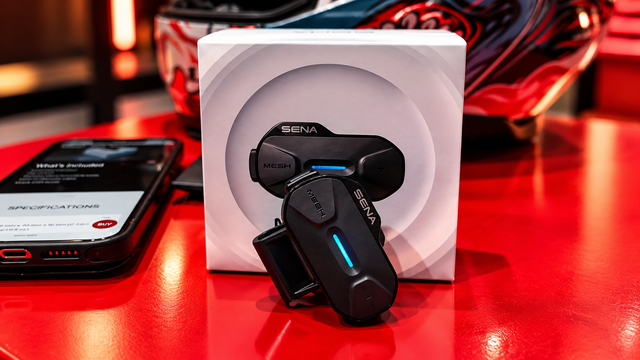
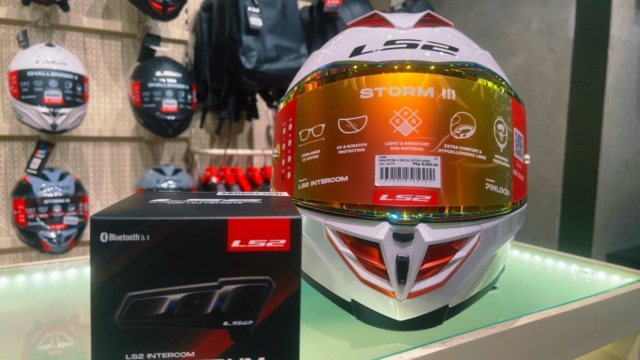
I’ve been running the ASMAX S1 for group rides for a while now, so when the F1s landed on my bike I already had a baseline to compare it against. This isn’t a “which one should you buy” showdown so much as a straight report on how the F1s feels after a few weeks of actual use. Some of it I’ve tested hard, some of it I still haven’t had the chance to push.
The short version: the audio is a clear step up, the clip-in mount makes swapping the unit between helmets painless, and the offline “Hi Max” voice commands work exactly the way they’re supposed to. CloudTalk is the one feature I can’t speak to firsthand yet, since my usual riding buddy wasn’t free for the test ride I had planned. I’ll update this once I’ve actually run it.
ASMAX F1s
The ASMAX F1S is a feature-packed Bluetooth intercom with mesh connectivity, clear audio, long battery life, and reliable communication for group rides.
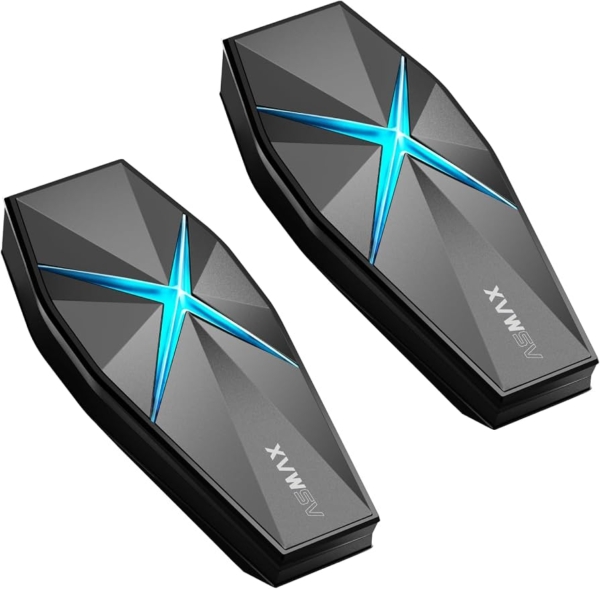
I’m keeping this review focused on what changed for me coming from the S1, since that’s the comparison most of you asking me about the F1s actually care about.
The Speakers Are the Upgrade That Matters Most
Coming from the S1, the first thing I noticed with the F1s was how much fuller the sound is. Music, GPS prompts, and intercom audio all come through with more bass and less of that tinny edge the S1 sometimes has at higher volumes. At highway speed with a full-face helmet on, the difference isn’t subtle, it’s the one upgrade I’d point to first if someone asked why the F1s is worth it.
The S1 is still solid for its price and I don’t think it’s a bad unit at all. But if audio quality is what you care about most, the F1s simply has better speakers, and that’s not something firmware updates can fix on the older unit. It’s the reason I’ve been reaching for the F1s over the S1 on rides where I actually want to enjoy the music.
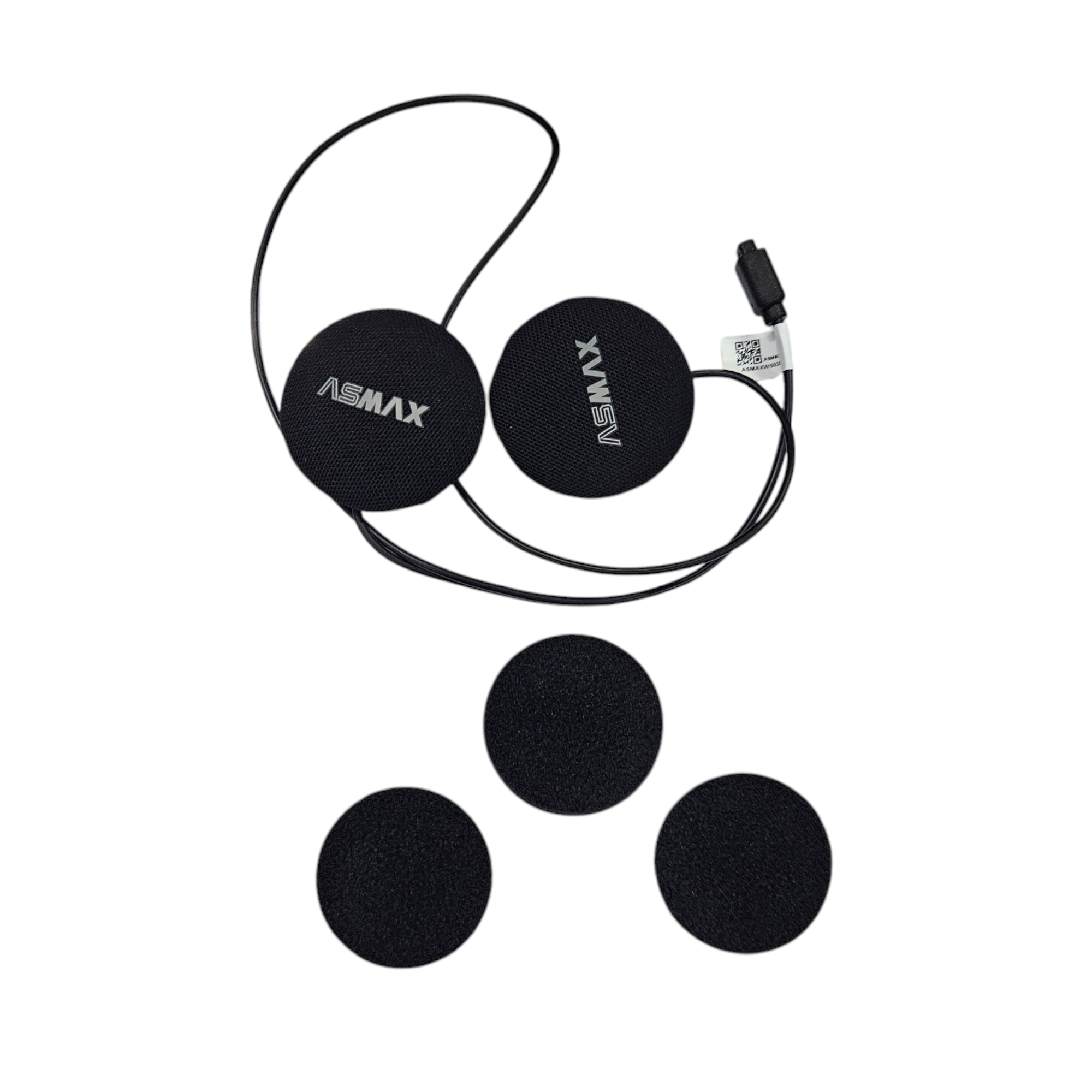
Intercom audio priority also feels tighter on the F1s. Music volume drops automatically the moment someone keys in on the intercom, so I’m not scrambling to turn the volume down mid-conversation. It’s a small thing, but it’s the kind of detail that makes daily use less annoying.
I ran the same playlist through both units back to back one afternoon just to be sure I wasn’t imagining the difference. The F1s handled the low end of the tracks noticeably better, where the S1 started to sound thin and a bit compressed once I pushed past about 70% volume. GPS voice prompts also came through crisper on the F1s, which matters more than it sounds when you’re relying on turn-by-turn directions in traffic and can’t afford to mishear a street name.
Clip-In Mount Makes Removing the Intercom Painless
One thing I didn’t expect to appreciate as much as I do on the ASMAX F1s is its clip-in mount system. The intercom module can easily be clicked in and out of the mounted base, making it quick and convenient to remove whenever you need to take it off your helmet. The base mount stays attached to the helmet, while the F1s intercom itself simply clips into place. Removing the unit takes only a few seconds, so there’s no need to repeatedly remove the entire mounting system or mess with the adhesive.
I’ve found this especially useful when storing my helmet, charging the intercom, or simply taking the unit off when I don’t need it. Once the base is properly installed, putting the intercom back on is just as easy click it into the mount and you’re ready to go. The clip holds the F1s securely in place while riding, so I haven’t experienced any noticeable rattling or slipping, even when riding on rougher provincial roads. It’s a simple feature, but one that makes the F1s much more convenient to live with compared with intercoms that are permanently attached to their mounts.
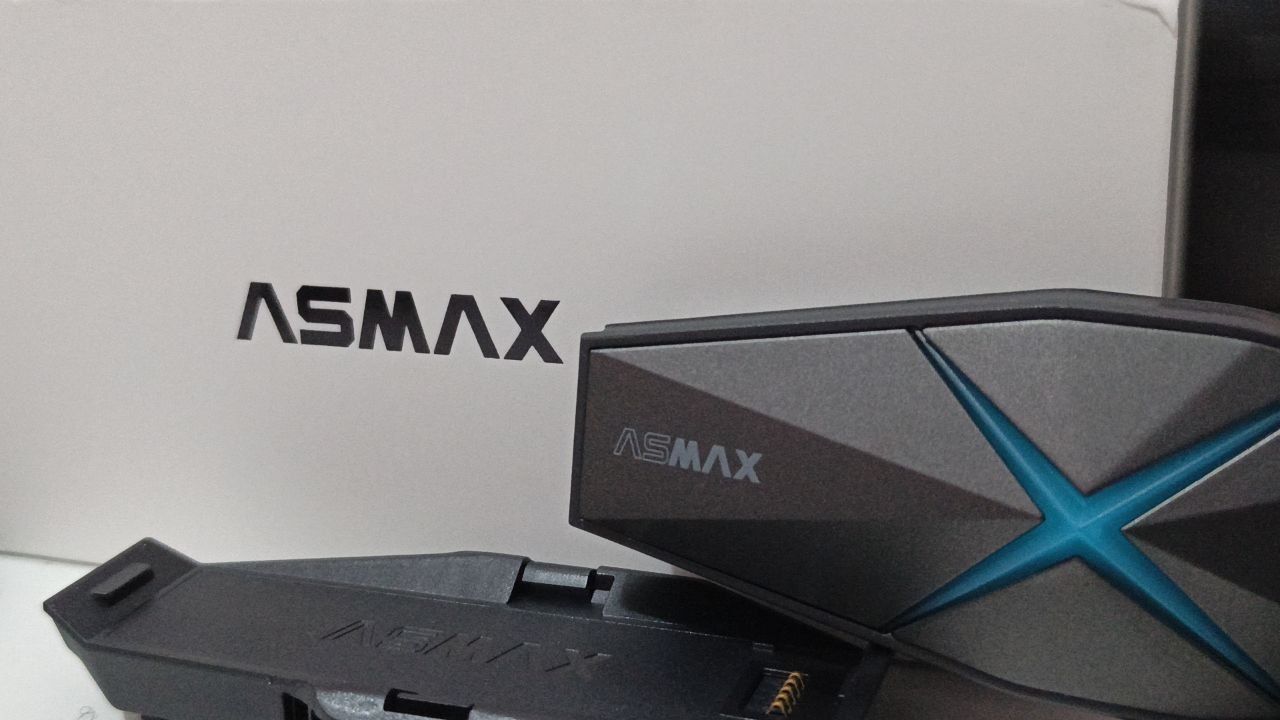
The initial installation still takes a bit of care, especially when positioning the boom microphone and speakers correctly inside the helmet. But once everything is set up, removing and reinstalling the intercom is quick and hassle-free. For me, that’s what makes the clip-in mount more than just a gimmick. You can leave the mounting base on the helmet and easily remove the F1s intercom whenever you need to.
Hi Max Voice Commands Work Offline, and That’s the Point
The “Hi Max” voice control is the feature I use the most without even thinking about it. Saying “Hi Max, Free Mode” drops me straight into intercom without touching a single button, which matters when I’ve got gloves on and both hands on the bars. What sold me on it is that it keeps working even with zero phone signal.
I’ve tested this specifically on stretches where my phone had no bars at all, mountain roads and a couple of tunnels included, and the offline commands still responded correctly. That’s a real advantage over intercoms that lean on your phone’s assistant, since those go quiet the moment you lose signal. For solo rides where I just want music control without pulling over, it’s been reliable every time.

The multilingual support is a nice touch too, though I’ve mostly stuck to English commands since that’s what I’m used to. Response accuracy has been consistently good in my testing, no random misfires or commands triggering the wrong action.
IP67 Rating Holds Up in Heavy Rain
The F1s is rated IP67, which means it’s designed to be protected against dust and temporary immersion in water. More importantly, I’ve actually put that rating to the test. I’ve used the F1s while riding through heavy rain, and the intercom continued working normally afterward without any issues.
For a motorcycle intercom, this is something I really appreciate. Getting caught in a sudden downpour isn’t exactly unusual here, and I don’t want to be constantly worrying about whether rain is going to damage the unit. So far, the F1s has handled the wet conditions I’ve thrown at it without any problems.
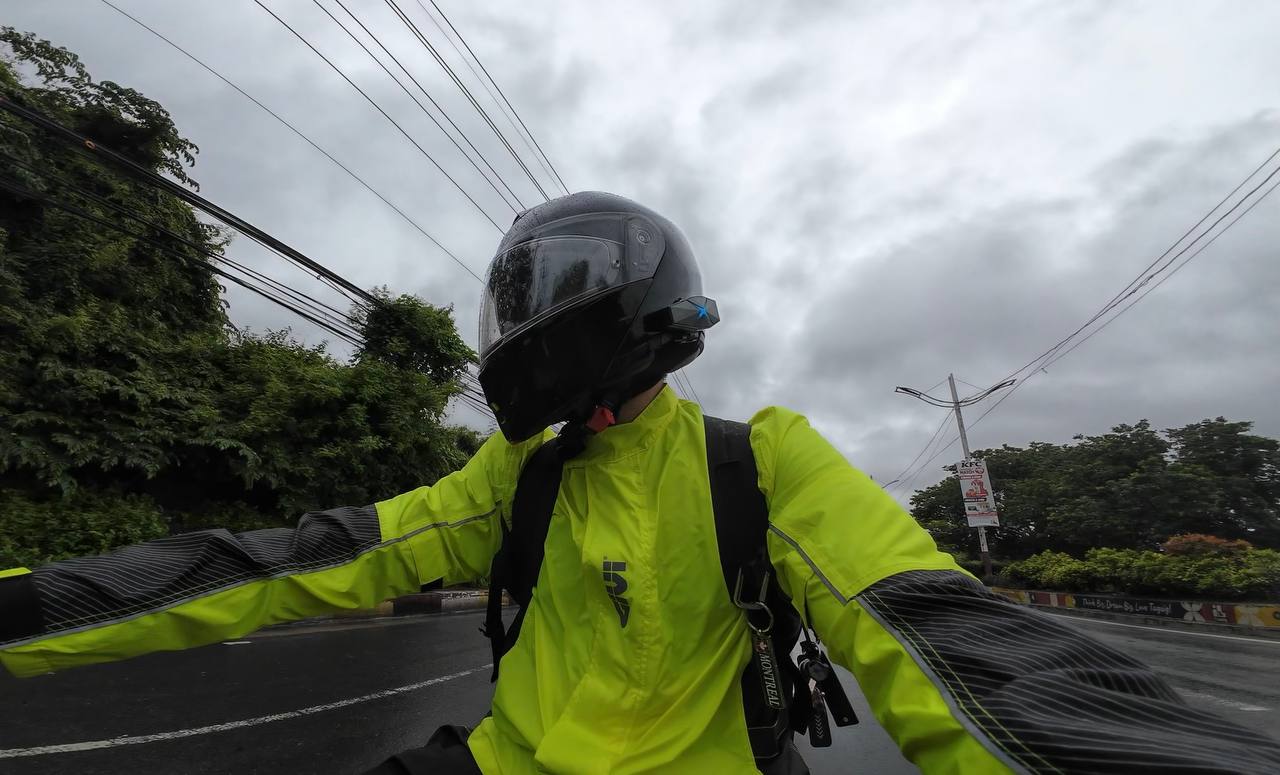
That said, IP67 doesn’t mean the intercom is completely waterproof under every possible situation, so I wouldn’t deliberately expose it to prolonged underwater conditions. But based on my experience, heavy rain during normal riding hasn’t been a problem for the F1s, which gives me a lot more confidence using it in unpredictable weather.
For riders who regularly deal with tropical rain, this is one of those features you might not think much about until you’re caught in a storm. Having the added protection means I can keep riding and using the intercom without immediately worrying about the unit getting soaked.
Battery Life Holds Up Through a Full Riding Day
Battery life is one of those things you don’t think about until it lets you down, and so far the F1s hasn’t given me a reason to worry. On a mix of commuting and a couple of longer weekend rides, I’ve consistently gotten through a full day of intercom and music use without needing a mid-ride top-up. That’s with the volume up higher than I’d normally run it, just to stress-test things a bit.
What actually impressed me is the fast charging. A quick 10-minute charge during a gas stop or lunch break is enough to buy a few more hours of use, which has saved me more than once when I forgot to charge the unit the night before. USB-C charging also means I’m not carrying a separate cable just for this device.
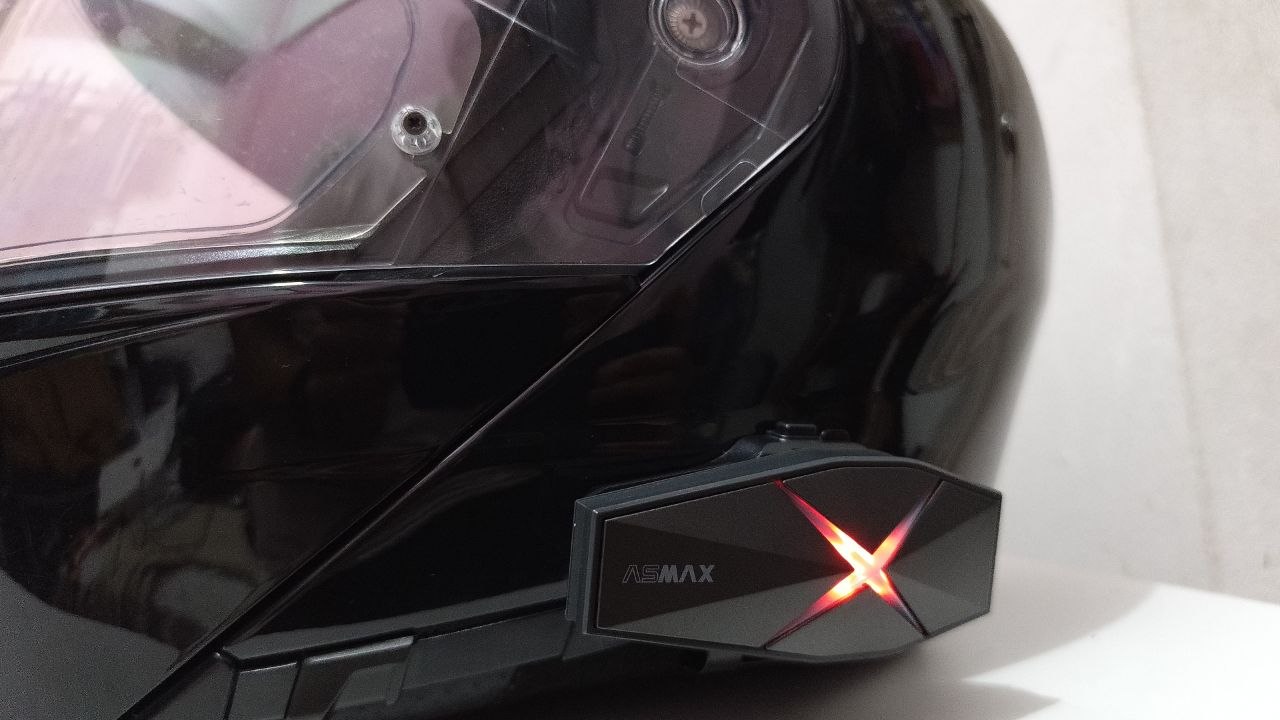
Standby time has been long enough that I don’t worry about the unit draining between rides either. I’ve left it clipped to a helmet for the better part of a week without touching the charger and it still had plenty of charge left when I picked the bike back up.
Free Mode Actually Works With Riders You Don’t Know
One thing I didn’t expect to use as much as I have is Free Mode, the open intercom that connects with any other F1s or compatible unit nearby without pairing into a private group first. I ended up testing this by accident, stuck in traffic with a few other riders I’d never met, and Free Mode picked up their units automatically. We ended up talking through the jam, calling out which lane was moving and which one had a stalled car up ahead.

It’s a small thing on paper, but in the moment it was genuinely useful, not just a novelty feature. Being able to warn a stranger two bikes ahead about a pothole or a car about to cut in, without fumbling for a phone or shouting through a helmet, made a stressful traffic situation noticeably less stressful. That’s the kind of real-world use case that sold me on Free Mode being more than just a marketing bullet point.
CloudTalk and ASMAX Mode: Two Features I’m Amazed By
I have to be upfront here, I still haven’t tested CloudTalk on its own yet. My plan was to run it with a family member on a ride together, but they weren’t available when I had the window to test it, so that part is still based on what ASMAX has built the feature to do rather than my own hands-on impressions.
ASMAX Mode, though, is basically CloudTalk and standard mesh Group Mode working together, and I’ve actually put that combination through a test with my riding buddies. While we were riding together in range, it ran on mesh just like Group Mode normally does, no noticeable lag or dropout. The moment two of our riders fell far enough behind to drop out of mesh range, ASMAX Mode leaned on the CloudTalk side and switched us over to a cellular connection automatically, and we stayed talking the entire time until we regrouped.
That gap ended up being a good test of the feature, since the two riders behind us weren’t just briefly out of mesh range, they’d fallen far enough back that we’d genuinely left them behind. Because we were still connected over ASMAX Mode, I was able to tell them that me and the other rider up front had pulled over to the side of the road and were going to wait for them there. There was no need to guess where everyone was or pull out a phone to text, we just talked through it the same way we would have if they’d been riding right next to us.
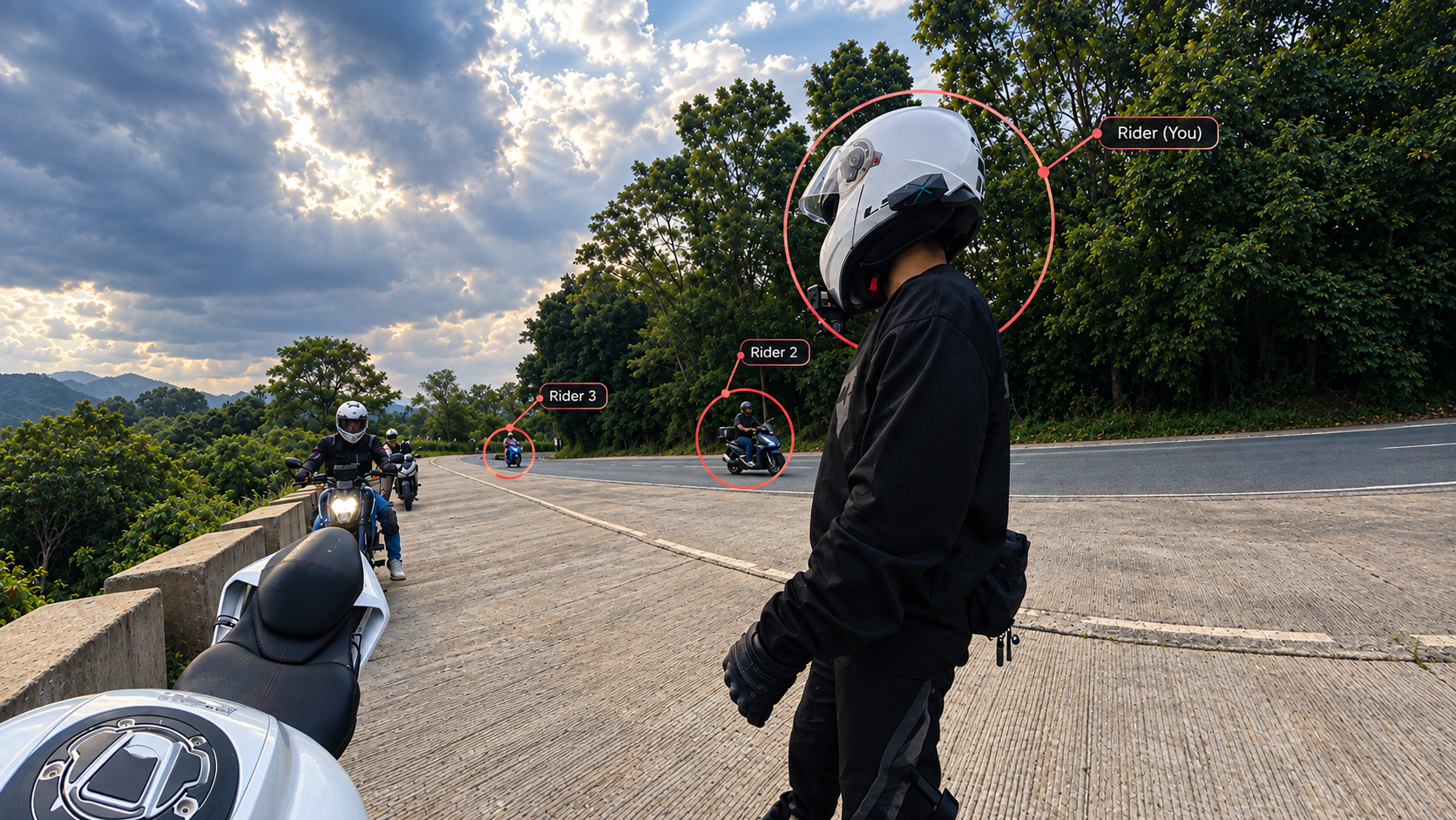
That’s the real value of ASMAX Mode, it’s not a separate standalone feature so much as it’s what happens when Group Mode and CloudTalk are stitched into one experience instead of two things you have to choose between. I didn’t get a notification or have to manually flip anything, the switch between mesh and cellular just happened in the background. Like CloudTalk, ASMAX Mode also supports up to 50 riders at once, so the hybrid isn’t limited to small groups either.
CloudTalk itself is ASMAX’s cellular-based mode built to route conversations over data instead of mesh, meaning no real distance limit and support for up to 50 riders, including cross-brand connectivity through the ASMAX World app. I’ll be updating that section with a standalone CloudTalk test once I get that ride scheduled. For now, ASMAX Mode has already proven itself as the feature that keeps a group connected when riders naturally spread out, including the time it mattered most, when two of us were genuinely left behind.
What Other Riders Are Saying About the F1s
Looking around at how other F1s owners describe it, the consistent theme is straightforward installation and clear sound even at highway speed, which lines up with what I’ve found myself. Several reviewers also point to the noise cancellation holding up well over wind and engine noise, and to the Bluetooth 5.3 mesh holding a stable connection with larger groups where older Bluetooth 4.2 units tend to drop off.
None of that surprised me given my own time with the unit. The general sentiment matches my own experience closely enough that I’m comfortable saying the F1s lives up to its billing on the basics.
Who the F1s Actually Makes Sense For
If you’re already on an S1 and mostly happy with it, the F1s isn’t a must-have upgrade unless audio quality specifically bothers you. The core intercom experience and voice control are close enough between the two that S1 owners aren’t missing much on the fundamentals. Where the F1s earns its keep is for riders who care about music and GPS audio just as much as group communication.
Riders who swap between multiple helmets depending on the trip are the other group I’d point straight to the F1s for. The clip-in mount removes enough friction from that process that it changes how often I’m willing to actually switch helmets.
ASMAX F1s
The ASMAX F1S is a feature-packed Bluetooth intercom with mesh connectivity, clear audio, long battery life, and reliable communication for group rides.
For anyone riding solo often on routes with patchy signal, the offline Hi Max commands alone are worth considering the F1s for. Being able to control music and calls without a connected phone is the kind of feature you don’t appreciate until you’re on a mountain road with zero bars.
FAQ
Is the ASMAX F1s better than the ASMAX S1?
For audio quality, yes, the F1s speakers are a clear step up from the S1. The S1 is still a solid budget option, but if sound is your priority, the F1s is worth the difference.
Does the Hi Max voice control work without phone signal?
Yes. The offline voice commands worked reliably in my testing on roads and tunnels with no signal at all, since they don’t rely on your phone’s assistant.
How does the clip-in mount compare to adhesive mounts?
It’s much easier to move between helmets. Once the first installation is done, swapping the unit to a different helmet takes seconds instead of dealing with adhesive pads.
What is CloudTalk and have you tested it?
CloudTalk is ASMAX’s cellular-based intercom mode built to support up to 50 riders with no distance limit, including cross-brand connectivity. I haven’t been able to test it firsthand yet and will update this review once I do.
What is ASMAX Mode?
ASMAX Mode is a dual-network system that auto-switches between mesh and 5G in real time, so nearby riders stay on low-latency mesh while anyone who drops out of range gets picked up over 5G automatically. Like CloudTalk, I haven’t tested this one hands-on yet and will update once I have.
Is the ASMAX F1s waterproof?
Yes, it’s rated IP67, which means it’s built to handle rain, dust, and typical riding conditions without issue.