Motorcycle infotainment used to be a binary choice: spend big on a premium all-in-one, or make do with a phone mount and hope for the best. The middle ground systems that actually deliver without cutting corners where it counts has been getting more crowded. But finding something that genuinely holds up is harder than the spec sheets make it look.
The CHIGEE AIO-5 Evo is CHIGEE’s answer to that gap. I tested it on my Keeway CR152 across city commutes and weekend runs, pairing it with my DJI action camera and pushing it through everything Metro Manila’s roads could throw at it. What I found was a system that punches well above its price with one important caveat you need to know before you buy.
CHIGEE AIO-5 EVO
The AIO-5 Evo is a 5-inch motorcycle smart riding display with built-in dual 1080p front and rear cameras, wireless CarPlay and Android Auto, blind spot detection, 10Hz GPS, and IP69K waterproofing. It is the more accessible entry point into CHIGEE's AIO-5 family, sitting below the AIO-5 Lite in the lineup. The key difference: no internal storage. You will need your own microSD card.
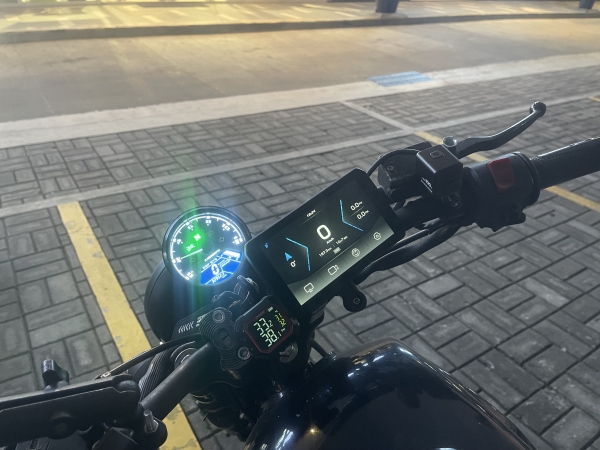
The CR152 is a budget naked with a stock analog cluster and no modern electronics to speak of. That made it the perfect test platform for the Evo, because if a system can make a small-displacement budget bike feel connected and capable, it can do the same for almost anything in a similar class.
Understanding What You Actually Need from a Smart Display
Before spending anything, it is worth being honest about what problem you are trying to solve. If you are on a big adventure tourer clocking thousand-kilometer days, the AIO-6 is probably where you should be looking. The bigger screen, higher brightness, and optional LTE connectivity make sense for that use case, but most riders are not doing that on most days.
For riders on a naked, a standard, or any middleweight where you’re not running a full touring setup, the AIO-5 Evo makes a more honest case for itself. You need navigation that doesn’t make you squint. You need cameras rolling in case something happens in traffic. You want blind spot alerts when cars crowd your lane on the highway. Those are the things the Evo does and it does them without charging you for features you’ll never use.
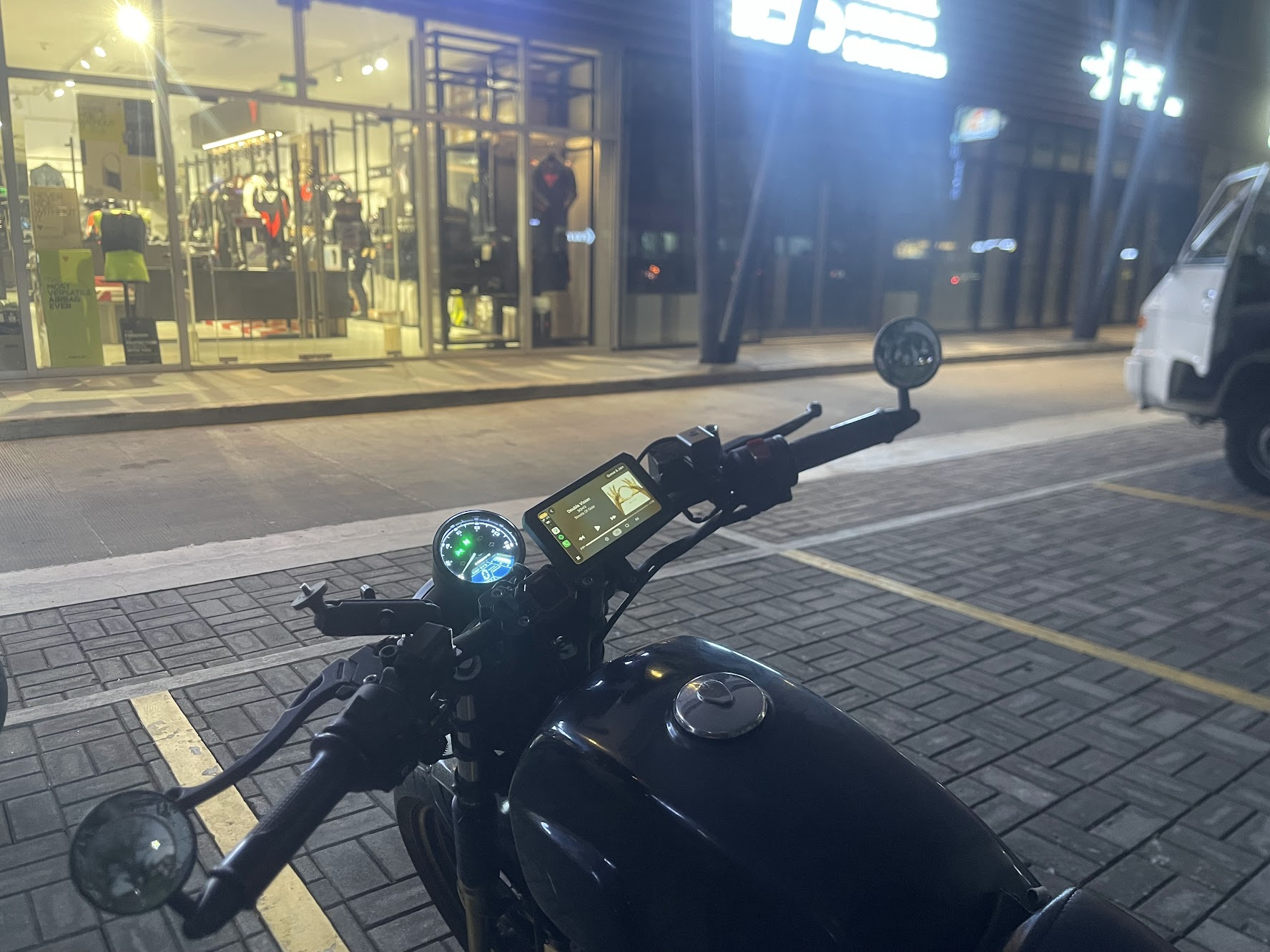
For the Keeway CR152 a bike that ships with a stock analog cluster and zero connectivity out of the factory the Evo brought it into the 21st century without making it look like a tech shop explosion. That balance of useful-without-overwhelming is harder to pull off than it sounds.
Design and Fit on the Keeway CR152
The 5-inch form factor is large enough to be genuinely useful for maps and camera feeds, but not so large that it swallows the cockpit of a smaller bike. On the CR152’s relatively narrow bars, it sits proportionally present without being dominant. Riders coming from the XR-2’s 4.3-inch screen will notice the step up immediately. It’s welcome.
Mounting is straightforward. No boutique bracket systems, no guesswork it clamped onto the CR152’s handlebars cleanly, and the cable routing was manageable even on a bike with zero factory provisions for accessories. The main power wire is the only thing you’re really managing. CHIGEE’s documentation covers that process well enough that I didn’t need to watch a single YouTube tutorial before starting, which, for a budget bike install, is saying something.
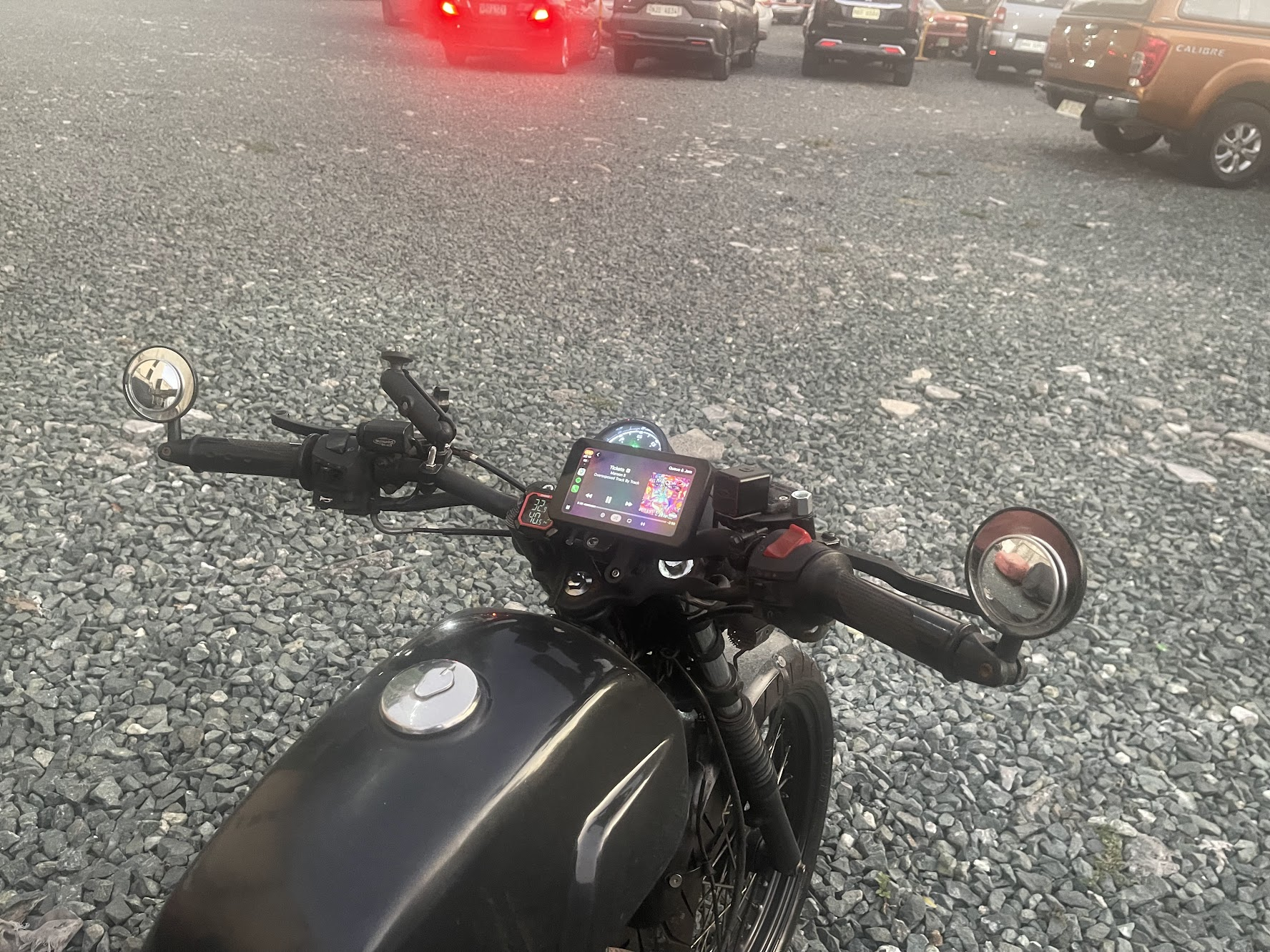
The physical design is clean. No protruding buttons, no gaps that invite water ingress, no cheap plastic that rattles at speed. For this price point, the fit and finish hold up to scrutiny.
The XR-2 proved reliable on my bike for months. Curious how the bigger Evo compares? Read the full review: Chigee XR-2 Long-Term Review
Build Quality You Can Ride Into a Storm
Here’s the thing that surprised me: the Evo has better waterproofing than the more expensive Lite. The Lite is rated IP67. The Evo is rated IP69K which adds resistance to high-pressure, high-temperature water jets on top of standard dust and submersion protection. At highway speed in rain, the water doesn’t seep in; it bounces off.
I tested during the dry season, so the IP69K rating hasn’t been stress-tested in actual monsoon downpours yet. That’s an honest gap in this review. But knowing it’s built above the IP67 benchmark most motorcycle electronics claim especially for Philippine riding where the rainy season isn’t optional is a reasonable thing to factor in.
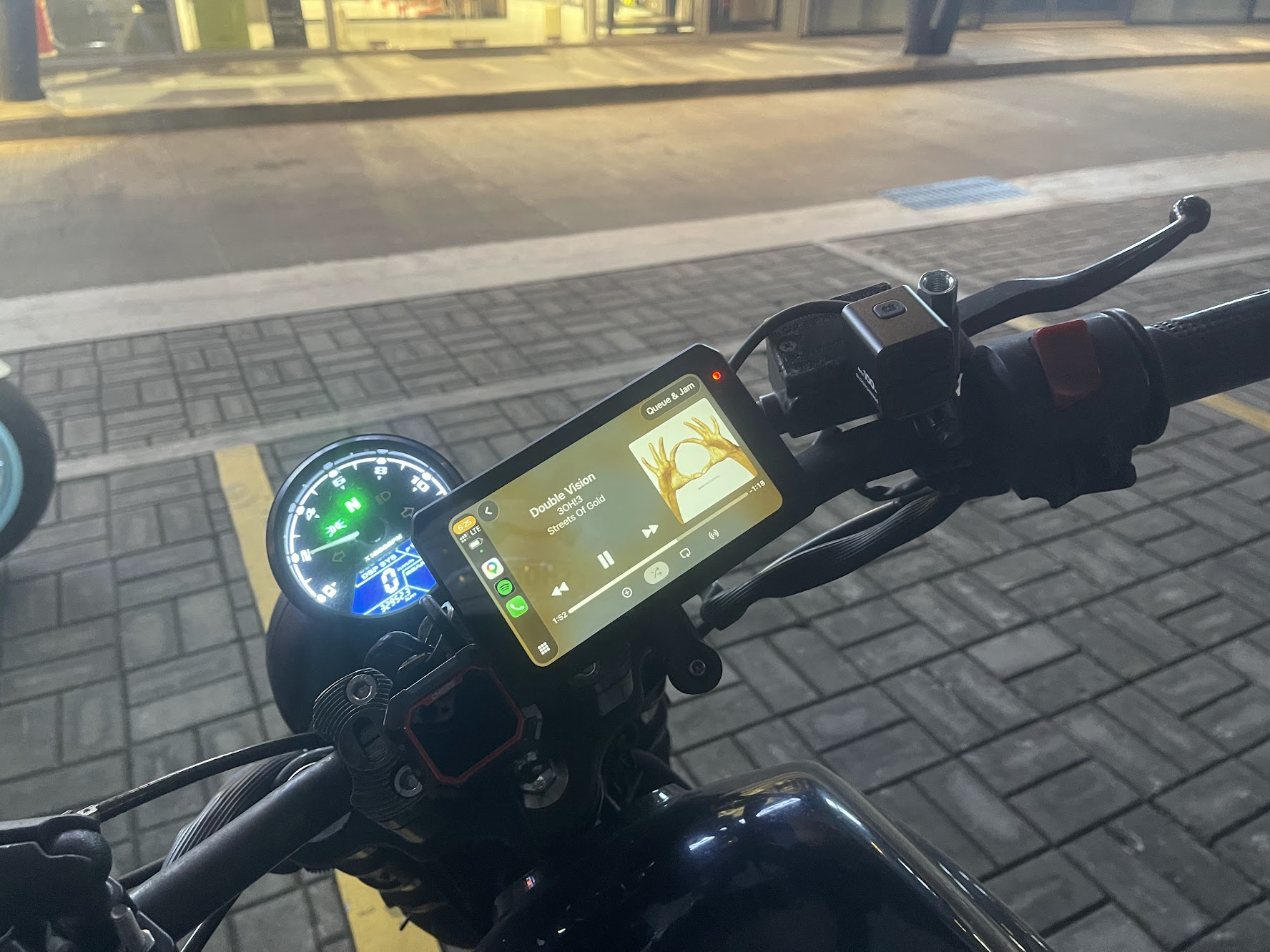
What matters beyond the rating is consistency. Electronics that technically survive water exposure but degrade in responsiveness or brightness over time aren’t actually solving the problem. Across consistent use on the CR152, the Evo has behaved the same every time I’ve turned the key. No degradation. No weirdness. It just works.
Screen Performance: No Sun Glare, Genuinely
Here is the thing about motorcycle display brightness specs: manufacturers throw nit counts around like they are the whole story, and they are not. Anti-glare treatment matters just as much, and in some conditions, more. A 2000-nit screen with a glossy finish can be harder to read in direct sunlight than a properly matte-treated 1200-nit panel, and the Evo’s finish is exactly that kind of properly treated panel.
The AIO-5 Evo runs a 1200-nit display at 1280×720 resolution, lower than the AIO-6’s 2300 nits on paper. But out on the road, under direct Philippine noon sun, it remained fully readable without me having to angle the unit, shade it with my hand, or squint. There was no sun glare to fight. The screen does exactly what it is supposed to do, and on a bike where you cannot really stop mid-ride to fiddle with positioning, that matters more than the raw number.
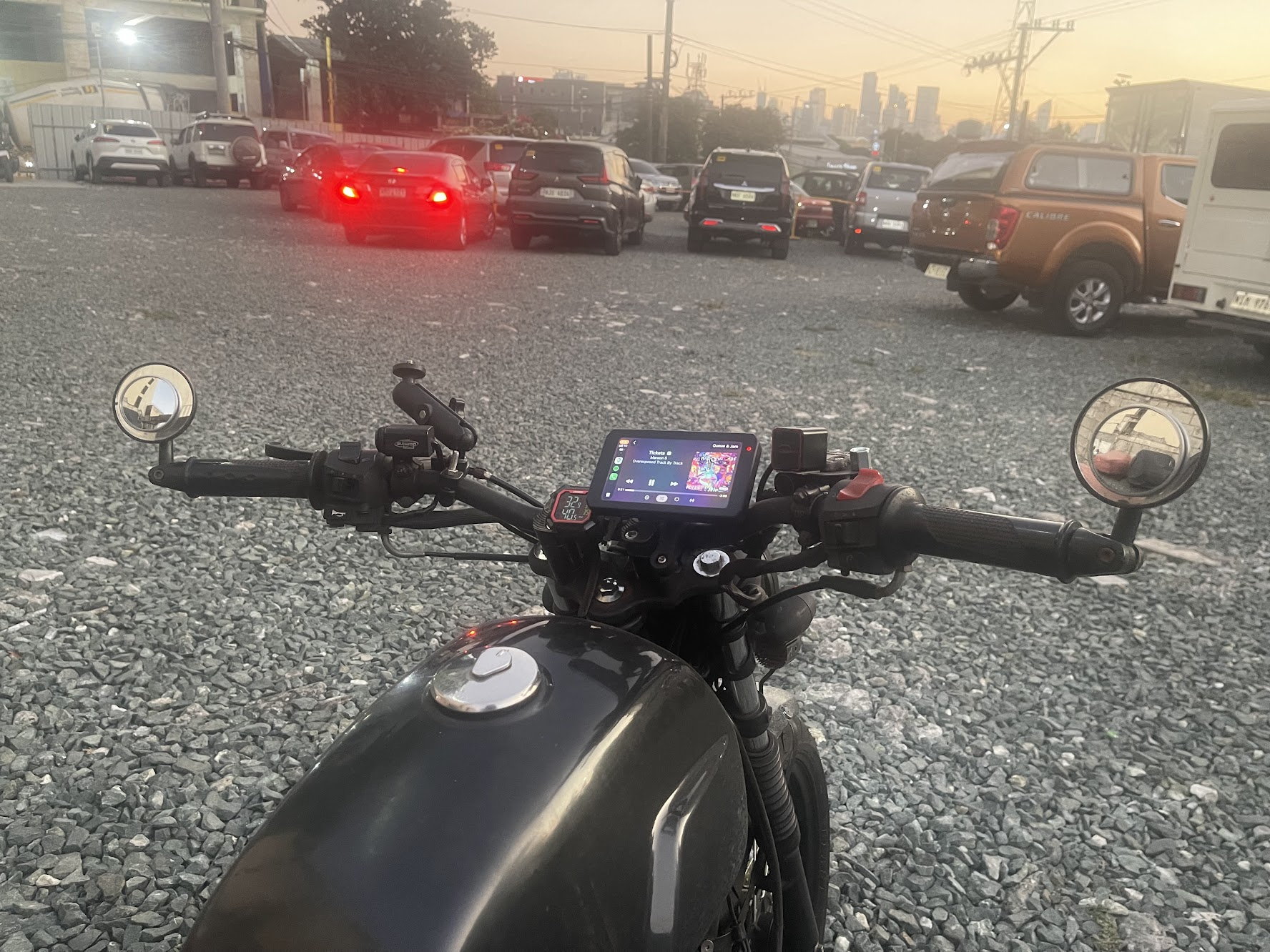
Is the AIO-6 brighter? Yes. If you are doing long all-day rides in open sun with no shade cover at all, that extra headroom shows. But for everyday urban riding, expressway runs, and weekend trips where you are moving in and out of shade regularly, the Evo’s screen is not the limiting factor. It is a non-issue in real conditions, and that is the honest answer.
One mount that solves both navigation and tire pressure monitoring. See how it compares to the Evo: Aoocci C3 Plus review
GPS and Ride Logging: It Remembers the Whole Ride
The AIO-5 Evo has 10Hz GPS built in, faster polling than most standalone units which typically run at 1Hz. What that means in practice is more accurate speed readings, tighter route traces, and positioning that actually keeps up with the bike in tight sections and elevated roads where signal can drop in and out. On the CR152’s daily route through Quezon City and out to the expressways, GPS lock was consistent from startup without the position wandering you sometimes get from slower units.
The built-in GPS also means the system is independent of your phone signal for positioning. CarPlay and Android Auto still need the phone connection, but your location, speed, and route data are tracked directly by the unit. That independence matters when your phone signal is patchy, which on provincial roads outside Metro Manila happens more often than the telcos would like to admit.
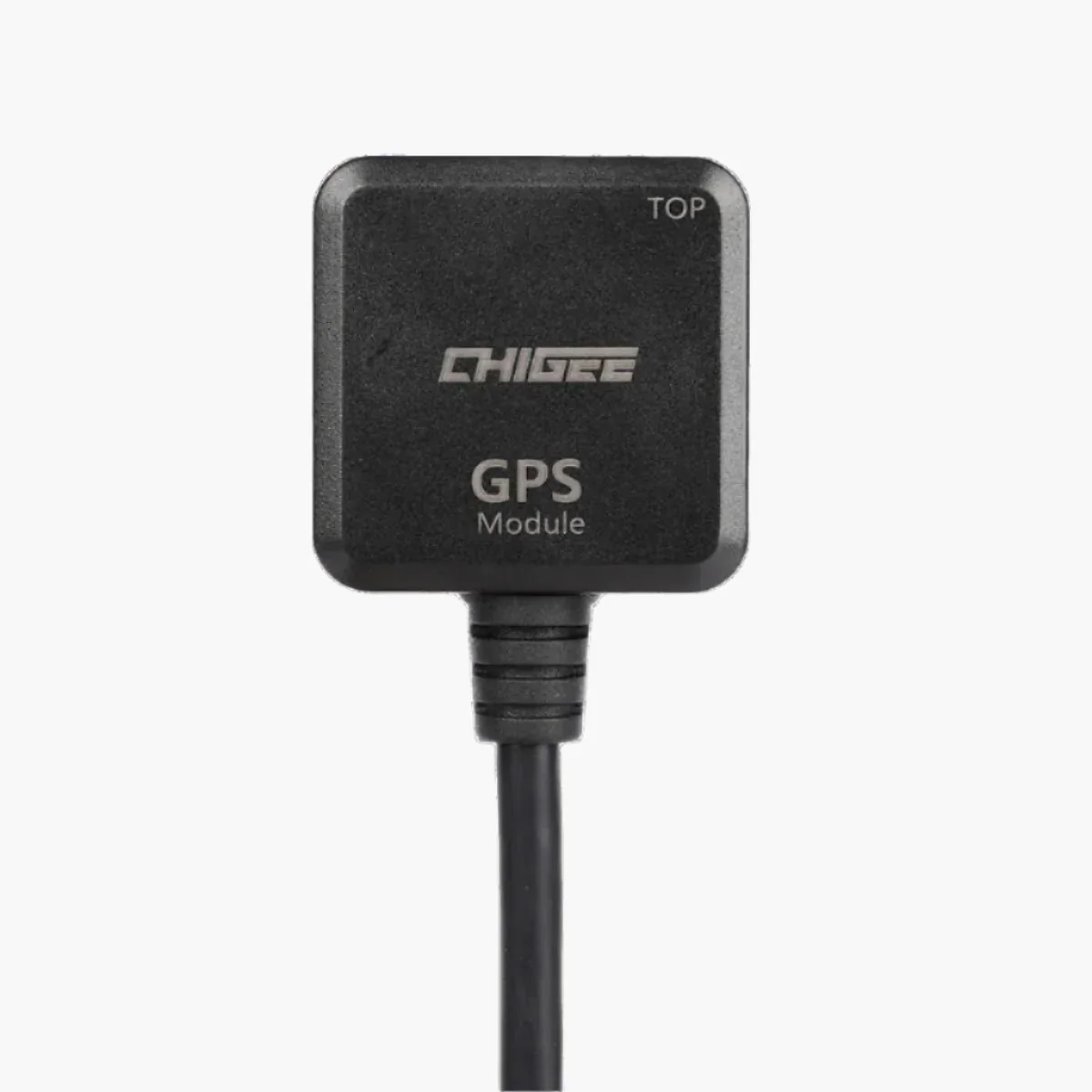
Ride data is logged continuously and can be reviewed through the CHIGEE Go app. For the CR152, which has no trip computer and no way to pull speed history or distance from the stock cluster, having a complete ride record attached to every journey is a genuine upgrade. You know exactly how far you rode, what your average speed was, and where the route took you, data that is useful whether you are tracking maintenance intervals or just satisfying your own curiosity about a road you want to ride again.
Pairing Your Action Camera: DJI, Insta360, and GoPro
The Evo supports action camera control and live preview for the three cameras most riders are already running. Supported models include DJI Action 4, Action 5 Pro, and Osmo 360; Insta360 X5, X4, Ace Pro, and Ace Pro 2; and GoPro HERO10 and newer. When connected, the CHIGEE acts as the GPS brain for the camera, feeding location, speed, and route data directly into the footage metadata. What you end up with is a GPX file of your entire ride: every kilometer, every speed reading, every turn mapped and time-stamped alongside your video.
I have been running this with a DJI on the CR152, and the integration changes how useful the footage actually is. You are not just reviewing video anymore; you are reviewing a ride with context. You can scrub to a specific moment and know exactly where on the map it happened and what speed you were at. For content creation, it adds a data layer that makes footage more interesting to edit and easier to annotate. For personal use, it means you can retrace a route you found by accident and actually find it again.
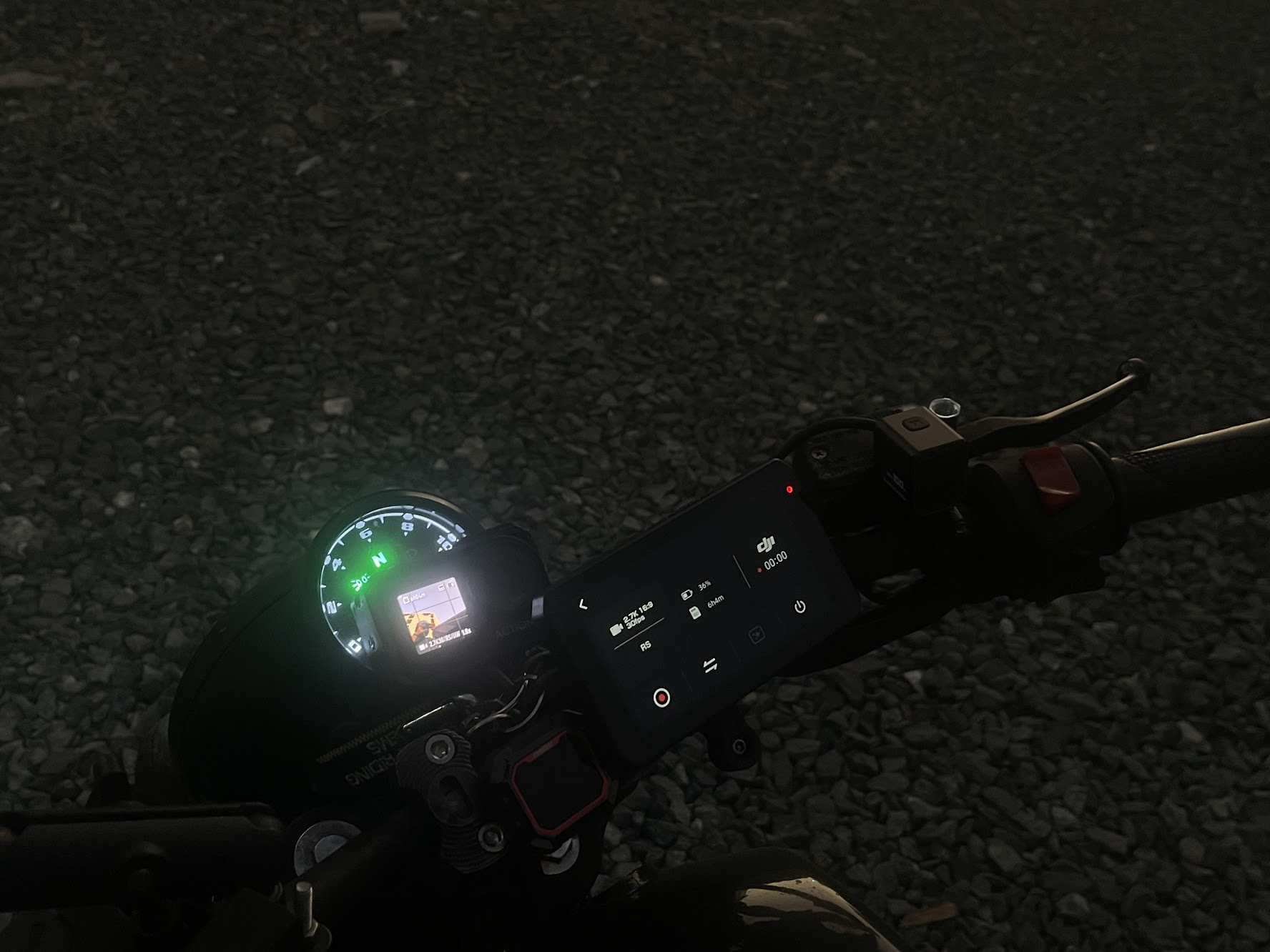
The setup process is straightforward regardless of which camera brand you are pairing. Connect via the Evo’s interface, and camera control and GPX data feed happen in the background without interrupting navigation or your onboard recording. You are not managing two separate systems. The CHIGEE consolidates the control, and your action camera just runs. It is one of those integrations that sounds like a nice-to-have until you have used it, at which point it becomes difficult to ride without.
Sample Video
Camera System: Clear When It Counts, Including at Night
The AIO-5 Evo ships with dual 1080p front and rear cameras built directly into the main unit, rather than as separate add-ons that need their own mounting points and cable runs. For a bike like the CR152 with no dedicated electronics housing, this integration keeps the installation clean and the cable count low.
During the day, the cameras capture license plate detail at typical following distances, road surface conditions, and intersection coverage, the essentials for incident documentation. HDR processing handles the contrast challenges of riding into direct sun or out of a tunnel without completely blowing out highlights or losing shadow detail in the same frame. It is not cinematography, but it is more than sufficient for its actual purpose: having clear, usable footage if something happens on the road.
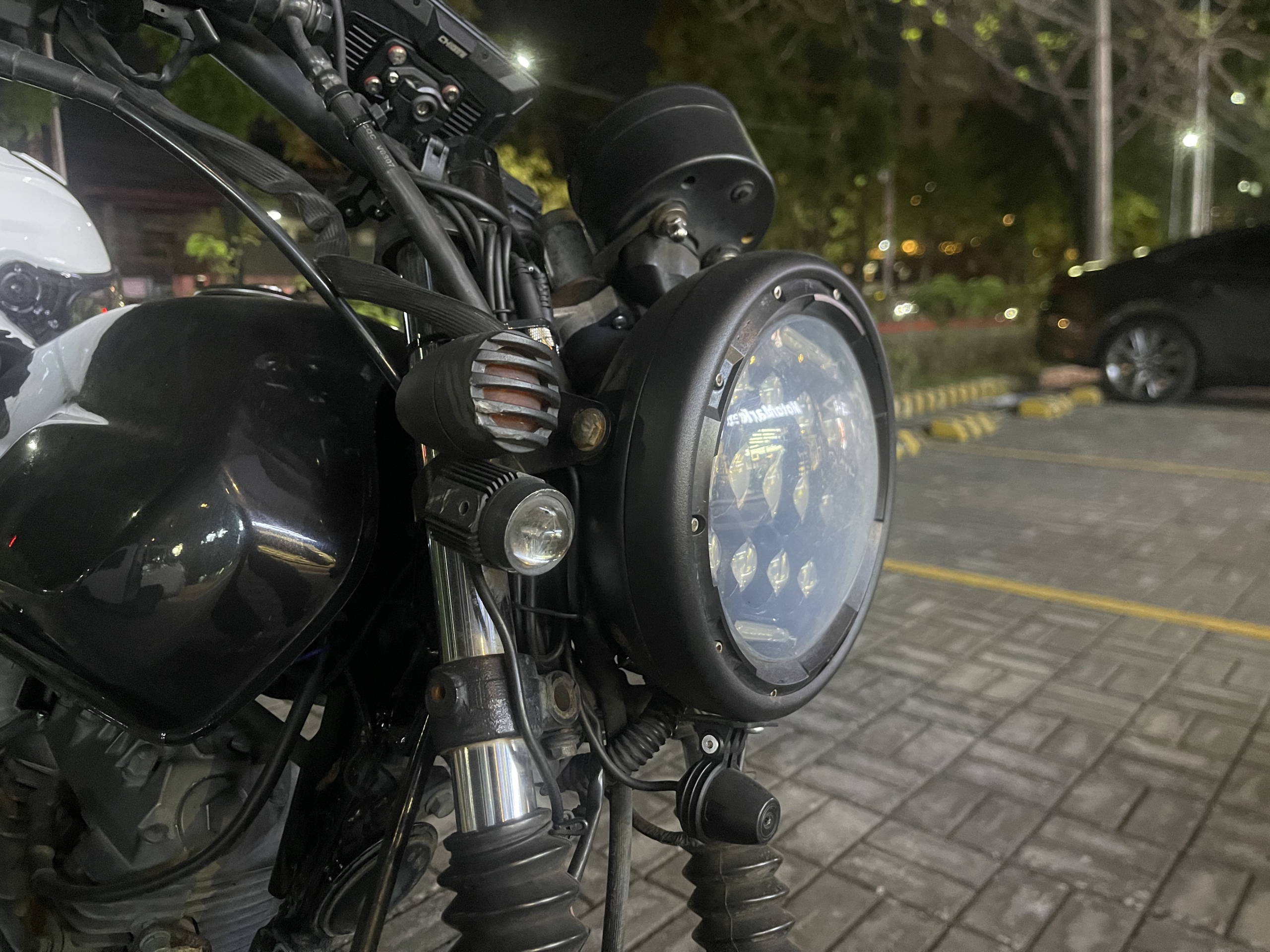
The cameras record in short looped segments, and a G-sensor automatically locks any clip flagged by sudden impact. You can also lock clips manually through the unit or the CHIGEE Go app. The loop recording means you are never manually managing storage; old footage cycles out as new footage comes in, and anything you need to keep gets locked before it is overwritten.
Night Performance
Night shooting is where a lot of budget motorcycle cameras quietly fail. The footage looks technically present but practically useless, dark, noisy, unable to resolve the detail you actually need to identify what happened. The AIO-5 Evo does not fall into that category. The automatic low-light adaptation keeps footage readable in the kind of conditions you actually encounter on night runs: streetlights, oncoming headlights, poorly lit provincial roads, and the transition zones between lit and unlit sections.
The front camera handles the typical night riding scenario, mixed lighting and high contrast between lit intersections and dark stretches between them, without the motion blur or noise blowout that cheaper units produce. License plates remain legible at normal following distances. Road conditions are readable. If something happens at night, the footage is actually useful, not just a record that you were there when it happened.
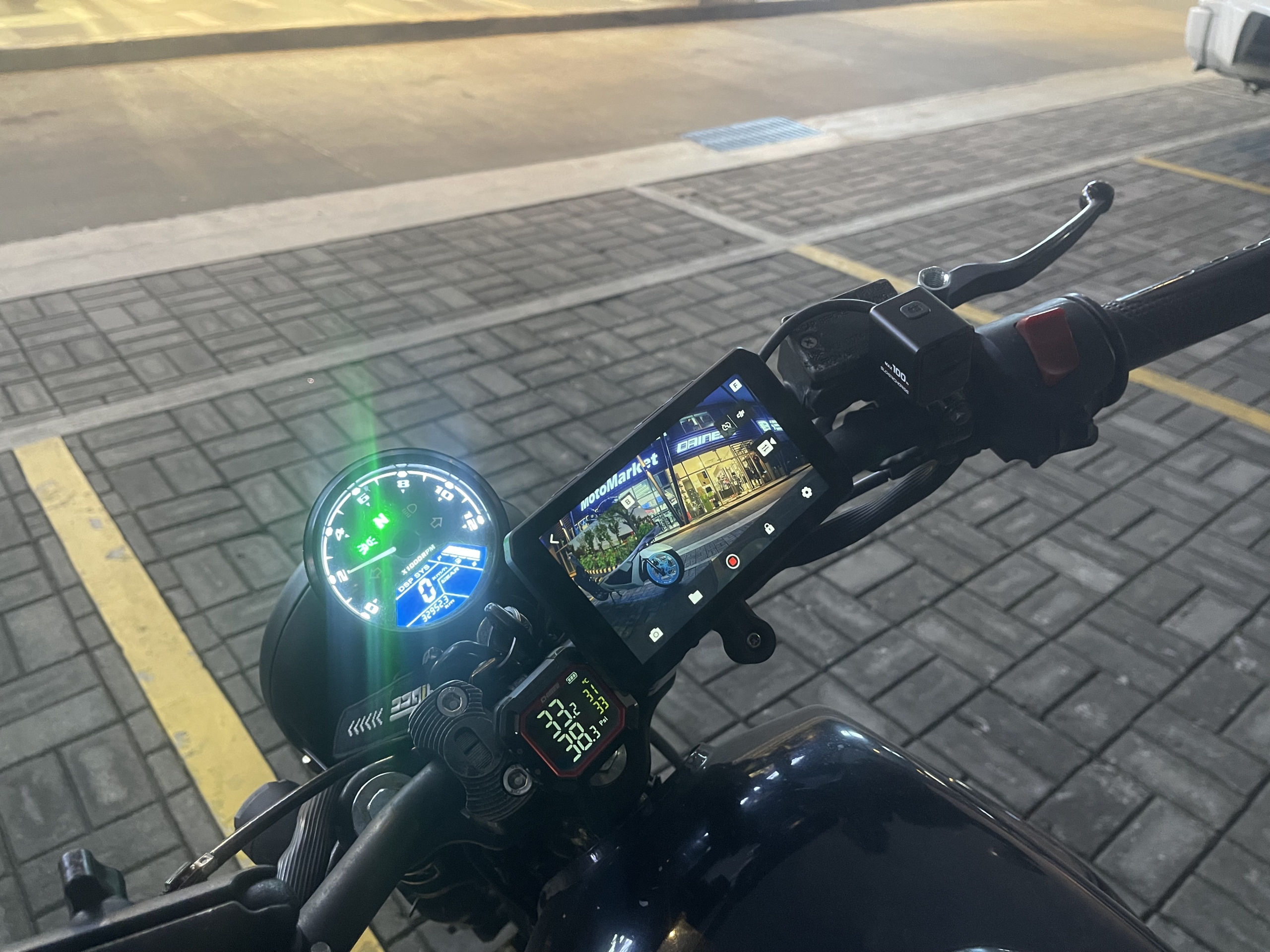
Rear camera night performance holds up equally well. Following traffic, tail lights, and sudden brake light changes in low ambient light all come through with enough detail to be useful for documentation. Night clarity is not a feature CHIGEE leads with on the Evo’s spec page, but it is one of the things you notice on the first night ride and remember, because you did not expect it to be this good at this price point.
Pair the Evo’s dual Bluetooth with true hands-free voice control using the RESO Pilot Pro. My full review: RESO Pilot Pro Review
The SD Card You Need to Buy
This is the most important thing to get right before your first ride: the AIO-5 Evo has no internal storage. The cameras do not record, and the system cannot perform firmware updates, without a microSD card inserted. The Evo is CHIGEE’s more affordable version of the AIO-5 Lite, and no internal storage is the primary tradeoff that keeps the price lower. It is a deliberate decision, not an oversight.
This is not a dealbreaker, but it is something you need to sort before the unit ever leaves the box. Get a U3-grade card. CHIGEE explicitly recommends this, and slower cards can cause recording stutters, save failures, or firmware update errors. For most riders, a 128GB U3 card gives you more than enough buffer before looped recording starts overwriting older footage. A 64GB card works fine if you are pulling footage regularly.
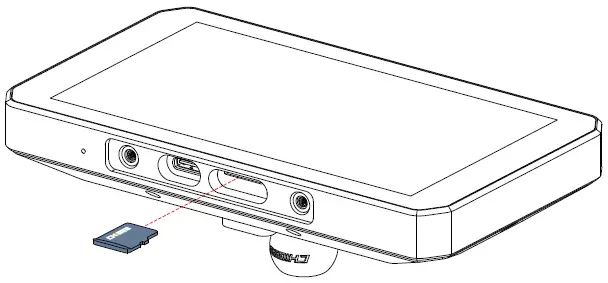
Think of the SD card as a mandatory accessory, not an optional one. Budget for it alongside the unit. If you are buying the Evo specifically because of the price point, factor in an extra few hundred pesos for a quality card and you are still well under what the Lite costs. The total package remains a strong value proposition; you just need to know to complete it before you ride.
Blind Spot Detection: The Safety Feature That Changes Highway Riding
The AIO-5 Evo’s BSD system uses a Sony IMX307 sensor paired with AI-based visual analysis, running continuously through the rear camera feed. When a vehicle enters your blind spot, the system delivers a visual alert on the display. It is an assist feature, not a replacement for checking your mirrors, but the difference it makes on multi-lane riding is real and noticeable.
On EDSA and C5 where vehicles are constantly shifting lanes and filtering into gaps, the BSD removes a layer of cognitive load from highway riding. You are not constantly doing mental inventory on what is beside you; the system is watching that space and will flag it when something enters. The first time it catches a car pulling alongside that you had not clocked in your mirrors, you understand why this feature matters.
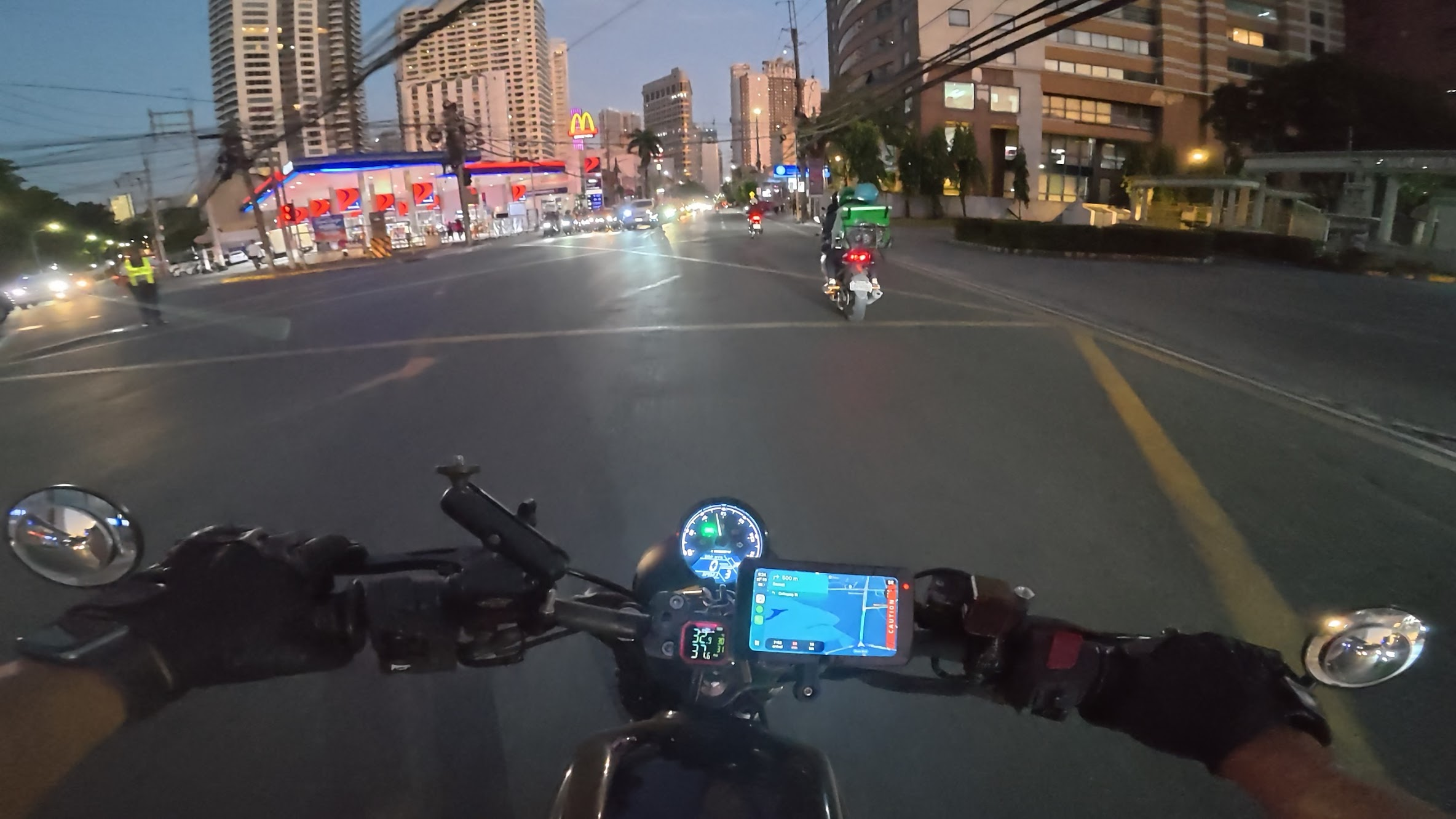
The BSD is one of those things that raises the question of what exactly the difference is between the Evo and the more expensive Lite. Both have BSD. Both have dual cameras. The honest answer is that the main difference is internal storage: the Lite ships with 32GB built in, the Evo has none. If you are comfortable sourcing and managing your own SD card, the Evo gives you essentially the same safety and recording capability at a lower price.
CarPlay, Android Auto, and Connectivity
The AIO-5 Evo connects to your phone wirelessly, no cable to manage, no physical interface to keep weatherproofed, no connector wearing out from daily connection and disconnection cycles. Once you have paired it the first time, subsequent connections happen automatically on startup. Your navigation, music, calls, and messaging run through the display without you touching the phone. On a bike you are mounting and dismounting every day, that frictionless startup matters more than it might seem.
On the Keeway CR152, which ships with a basic stock cluster and no connectivity at all, this is the gap between analog and modern. Waze on a 5-inch screen, call management through a helmet intercom connected via Bluetooth, music controlled without reaching for anything: it all runs through the Evo. For the CR152 rider who bought the bike partly because of its price point and is now looking to add capability incrementally, the Evo is a logical next step that does not require a bike upgrade to access.
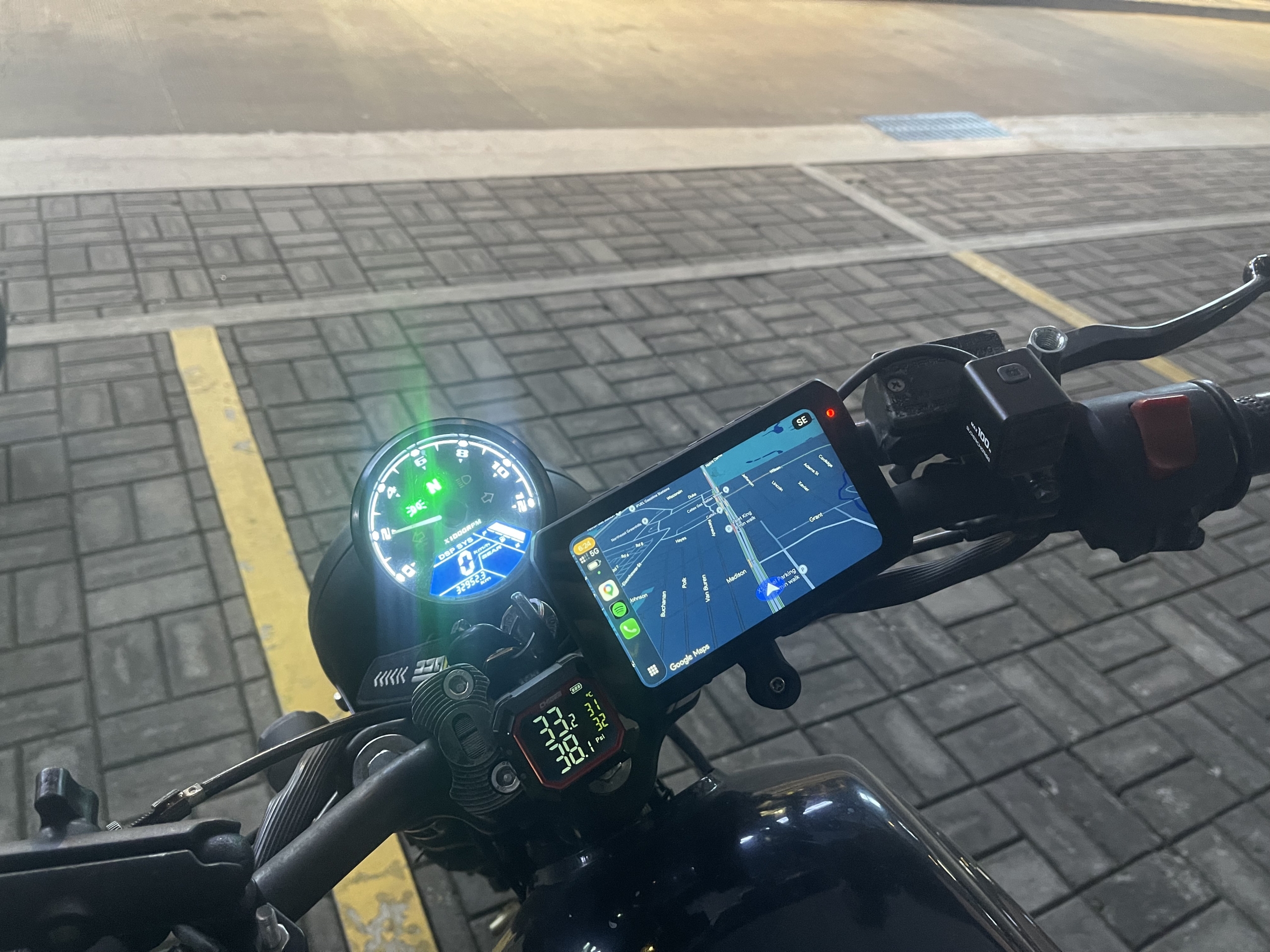
Dual Bluetooth audio support means you can pair a helmet headset without occupying the only available channel. This is useful if you are riding with a pillion who also has a headset, or if you are swapping between an intercom and wireless earbuds depending on the ride. It also means that if one connection drops, you have a fallback without needing to stop and re-pair. Small detail, but it reflects the kind of considered design that shows up in actual use rather than on a spec sheet.
AIO-5 Evo vs AIO-5 Lite: What You Are Actually Paying For
The Evo and the Lite look similar on paper until you go line by line. Both have a 5-inch display, dual 1080p cameras, BSD, GPS, wireless CarPlay and Android Auto, and action camera support. The primary difference is storage: the Lite ships with 32GB internal storage, while the Evo has none and requires a microSD card. There is also a waterproofing difference worth noting: the Evo is rated IP69K while the Lite is rated IP67, which means the Evo actually has the advantage in wet conditions.
If you want a plug-and-play experience where the unit works fully out of the box with zero additional purchases, the AIO-5 Lite is that product. Insert the microSD card or not, it will still function for navigation and CarPlay because it has its own storage for system operations. The Evo needs the SD card before cameras and firmware updates will work at all.
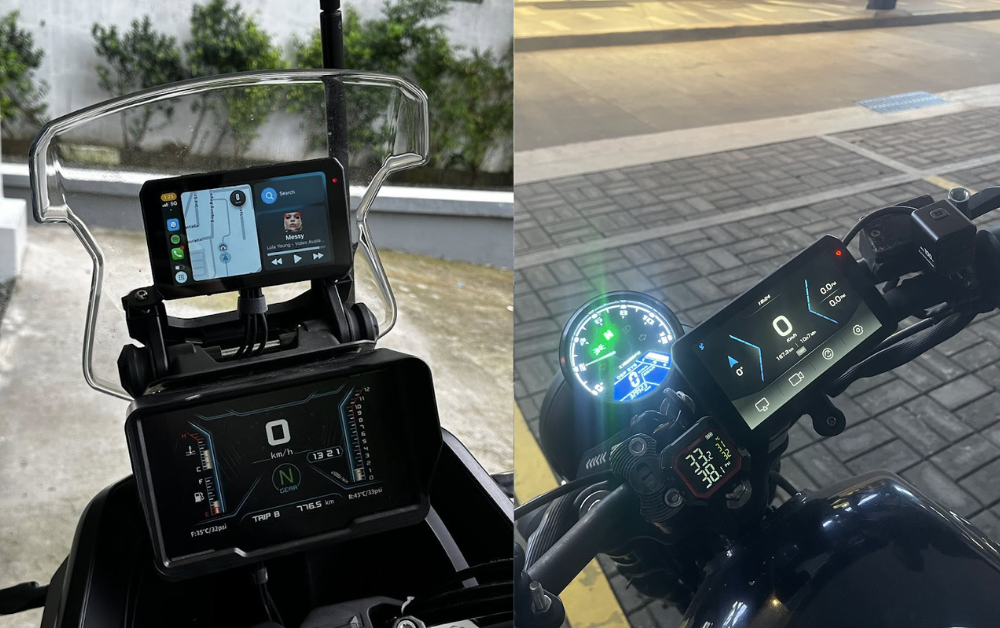
For riders who do not mind the one-time SD card purchase, the Evo closes most of the gap. You get BSD, you get the same camera quality, you get better waterproofing, and you pay less. The Lite makes sense for riders who want the simplest possible setup from day one. The Evo makes sense for riders who want value and are willing to spend five minutes completing the package themselves.
Making the Right Choice
Choose the AIO-5 Evo if:
- You want a full-size 5-inch riding display with BSD at a lower price than the Lite
- You are comfortable buying a U3 microSD card separately to complete the setup
- You are pairing an action camera, DJI Action 4/5 Pro, Insta360 X4/X5/Ace Pro, or GoPro HERO10 and newer, and want integrated GPX ride logging
- Night riding is part of your regular schedule and camera clarity matters
- You want better waterproofing (IP69K) than the Lite offers
Consider Other Options if:
- You want full out-of-the-box functionality without any additional purchases, consider the AIO-5 Lite
- You want the highest possible screen brightness for extreme all-day sun, the AIO-6 at 2300 nits is significantly brighter
- You prefer a smaller form factor for a tighter cockpit, the XR-2 at 4.3 inches fits more proportionally on bikes with minimal handlebar real estate
Feature Summary
| Feature | AIO-5 Evo |
|---|---|
| Screen Size | 5 inches |
| Resolution | 1280 x 720 |
| Brightness | 1200 nits |
| Waterproof Rating | IP69K |
| GPS | 10Hz built-in |
| Cameras | Dual 1080p front and rear, built-in |
| Smartphone Integration | Wireless CarPlay and Android Auto |
| Blind Spot Detection | Yes, Sony IMX307 with AI |
| Action Camera Support | DJI Action 4/5 Pro/Osmo 360, Insta360 X5/X4/Ace Pro/Ace Pro 2, GoPro HERO10+ |
| Night Recording | Yes, automatic low-light adaptation |
| Internal Storage | None, microSD card required (U3 grade recommended) |
| Bluetooth | Dual audio pairing |
| Parking Mode | Yes, vibration-triggered 30-second clip |
Final Perspective
After running the AIO-5 Evo on the Keeway CR152 through daily commutes, expressway runs, and night rides, it lands where it needs to for a system at this price point. The screen is genuinely glare-free, not just technically readable. The BSD catches what your mirrors miss on busy highways. The cameras hold up at night when a lot of competitors quietly give up. And the action camera integration, getting a full GPX ride log paired to your DJI, Insta360, or GoPro footage, is the kind of feature that makes you rethink what a budget option actually means.
The SD card situation is the one thing you need to plan for before the box opens. It is not a flaw in the design; it is a deliberate tradeoff that keeps the price where it is, but it is not optional. Get a U3 card, format it through the unit’s settings, and you are done. After that, the Evo runs itself. It records, it navigates, it watches your blind spots, and it stays out of the way while you ride.
CHIGEE AIO-5 EVO
The AIO-5 Evo is a 5-inch motorcycle smart riding display with built-in dual 1080p front and rear cameras, wireless CarPlay and Android Auto, blind spot detection, 10Hz GPS, and IP69K waterproofing. It is the more accessible entry point into CHIGEE's AIO-5 family, sitting below the AIO-5 Lite in the lineup. The key difference: no internal storage. You will need your own microSD card.
For riders who want a serious smart display with BSD and dual cameras without paying the Lite’s premium for built-in storage, the AIO-5 Evo is a genuinely honest product. It does not pretend to be the Lite. It does exactly what it says it does, and it does that well. On my Keeway CR152, through Metro Manila traffic and weekend expressway runs, the AIO-5 Evo earned its place on the bars.