
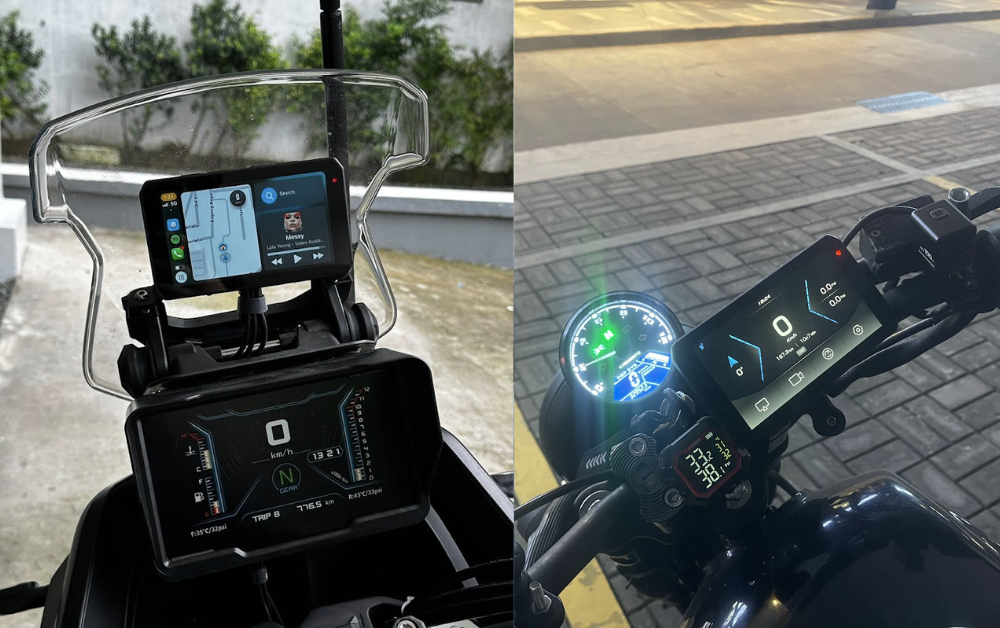
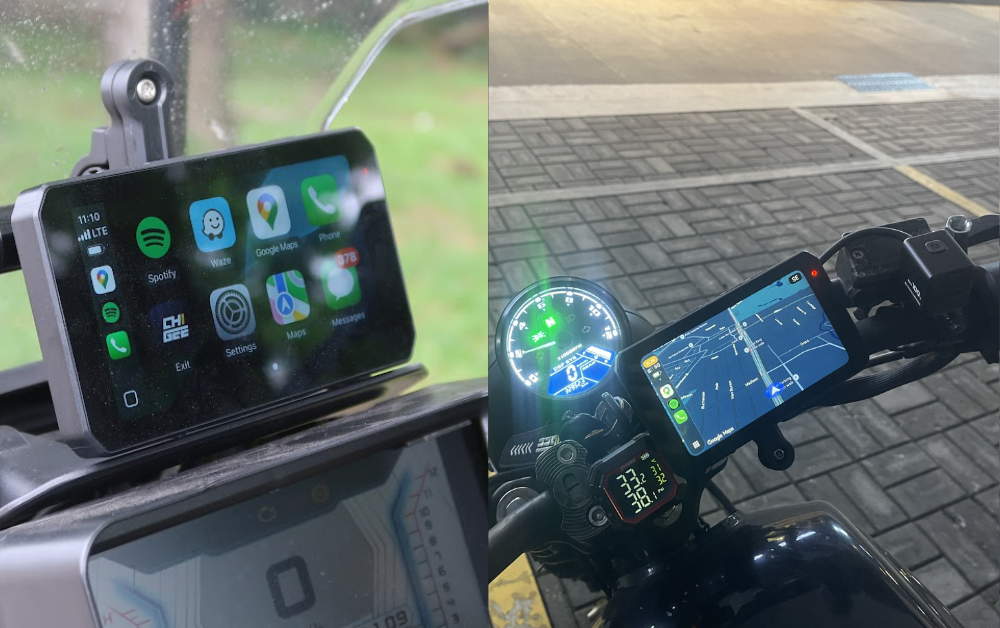
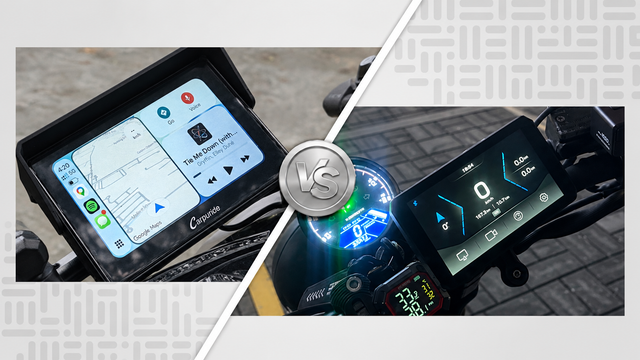
CHIGEE’s AIO-5 lineup has two siblings that confuse a lot of riders at the shortlist stage: the AIO-5 EVO and the AIO-5 Lite. They share a 5-inch display, dual 1080p cameras, wireless CarPlay and Android Auto, action camera integration, blind spot detection, and the same external GPS module. On paper, they look like near-twins.
The differences are real but narrower than most comparison articles suggest. The AIO-5 EVO is a lightweight flagship derived directly from the AIO-6, keeping the same core functionality, smoothness, and intelligence at a lower price. The AIO-5 Lite, meanwhile, is the earlier all-in-one model that retains compatibility with BMW CGRC modules and ships with built-in internal storage the EVO doesn’t have.
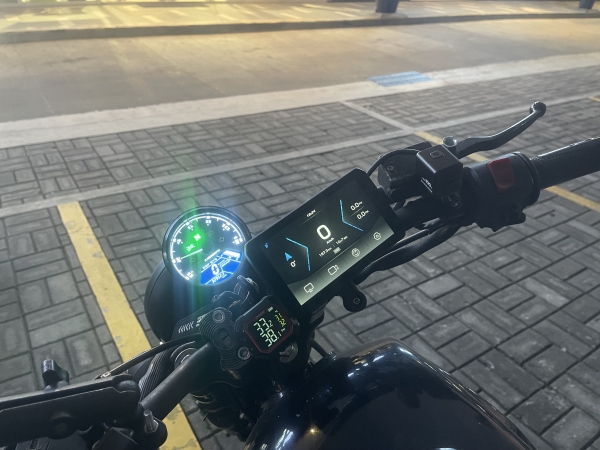
CHIGEE AIO-5 EVO
The AIO-5 Evo is a 5-inch motorcycle smart riding display with built-in dual 1080p front and rear cameras, wireless CarPlay and Android Auto, blind spot detection, 10Hz GPS, and IP69K waterproofing. It is the more accessible entry point into CHIGEE's AIO-5 family, sitting below the AIO-5 Lite in the lineup. The key difference: no internal storage. You will need your own microSD card.
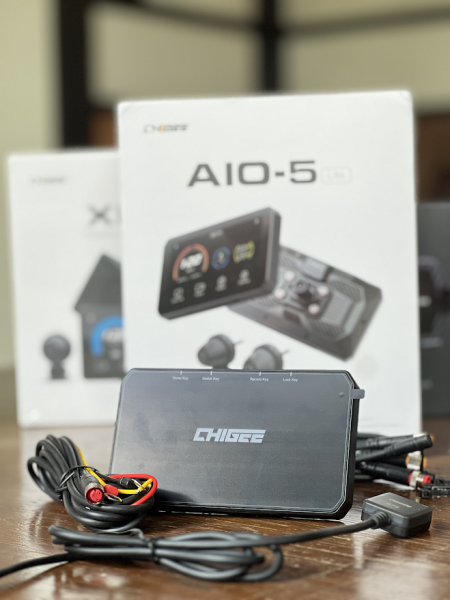
CHIGEE AIO-5 LITE
A compact, handlebar-mounted CarPlay/Android Auto display designed for versatile use across motorcycles paired via Bluetooth with external tire pressure sensors for real-time safety monitoring and seamless ride data integration.
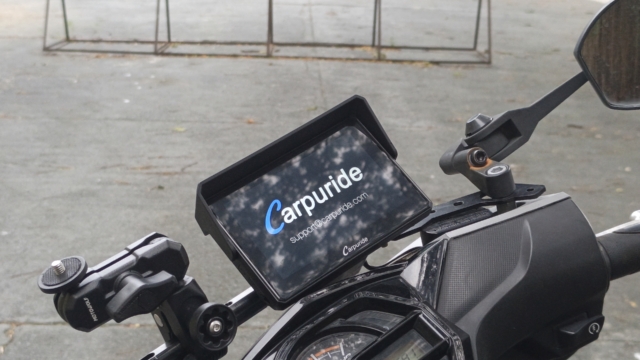
I’ve run the EVO on a Keeway CR152 through Metro Manila daily and hammered the Lite through a 250 km mixed-weather ride on an SVT650X. Both are good, but they solve slightly different problems for slightly different riders. If you buy the wrong one, you’ll feel it every time you swing a leg over the bike.
The Short Answer
Buy the AIO-5 EVO if you want flagship-level AIO-6 functionality at a lower price, you want the better waterproof rating, and you don’t need BMW CGRC CAN/LIN or OBD integration. Buy the AIO-5 Lite if you already own (or plan to buy) CHIGEE’s BMW CGRC modules or OBD module, you want the Sony IMX307 STARVIS camera sensors for better low-light recording, or you want 32 GB of internal storage included.
Now the long version.
What Both Units Include In the Box
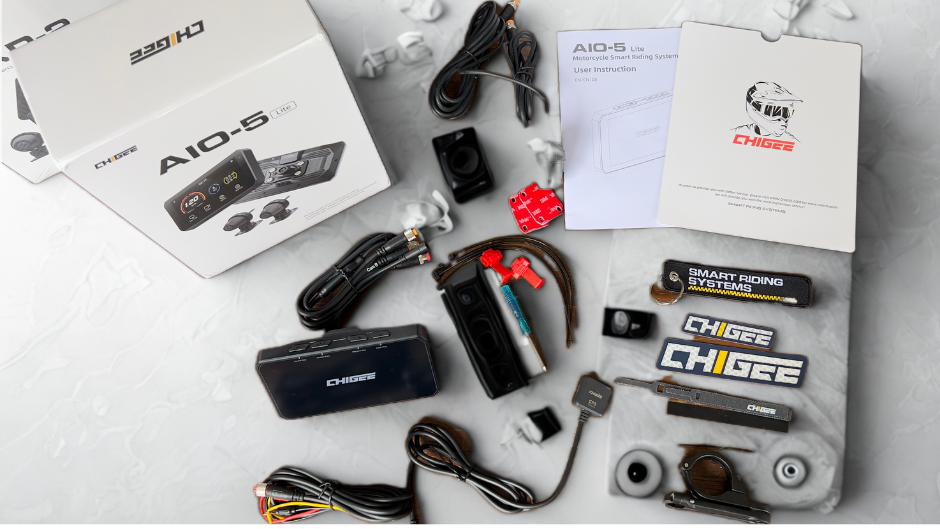
Both packages ship with the same core hardware: the 5-inch main display, two separate camera modules (front and rear) with cables, the external GPS module, a mounting bracket with installation hardware, the power cable and wiring harness, plus installation tools and the manual. Nothing about the in-box contents distinguishes one from the other at the accessory level. Both also share almost every hardware and software feature that defines the CHIGEE AIO-5 experience.
On the display and camera side, both units run a 5-inch IPS touchscreen at 1280×720 with 1200-nit peak brightness and a glove-responsive touch layer, plus dual 1080p front and rear cameras at 30 FPS with HDR. Both include parking monitoring, G-sensor collision lock, loop recording in 1, 2, or 3-minute segments, fusion output for front and rear footage in a single file, and data overlay for time, speed, and GPS coordinates. Blind Spot Detection is active on both, drawing from the rear camera feed.
On the connectivity and internals side, both units auto-reconnect wireless CarPlay and Android Auto on startup, support dual Bluetooth 5.0 audio pairing, and run dual-band 2.4/5 GHz Wi-Fi. Action camera integration is identical between the two, covering live preview and on-screen control for DJI Action 4, Action 5 Pro, and Osmo 360; Insta360 X4, X5, Ace Pro, and Ace Pro 2; plus GoPro HERO10 and newer. Both run 4 GB of RAM on an Arm Cortex-A53 1.2 GHz processor under CGOS (Linux) with over-the-air firmware updates, and both require hardwired installation to the bike’s accessory or battery circuit.
What’s Optional on Both Units
This is where a lot of comparison articles get things wrong. Several features that riders assume come with the Lite are actually optional accessories sold separately on both units. Neither unit ships with TPMS sensors, the handlebar remote, or the microSD card in the box.
The microSD card is the biggest example, required for dashcam recording on both units and mandatory for OTA firmware updates on the EVO. The Lite’s 32 GB internal storage covers the OS and system operations, so the unit still boots, updates, and runs CarPlay without an SD card inserted. CHIGEE recommends U3-grade cards up to 256 GB for both.
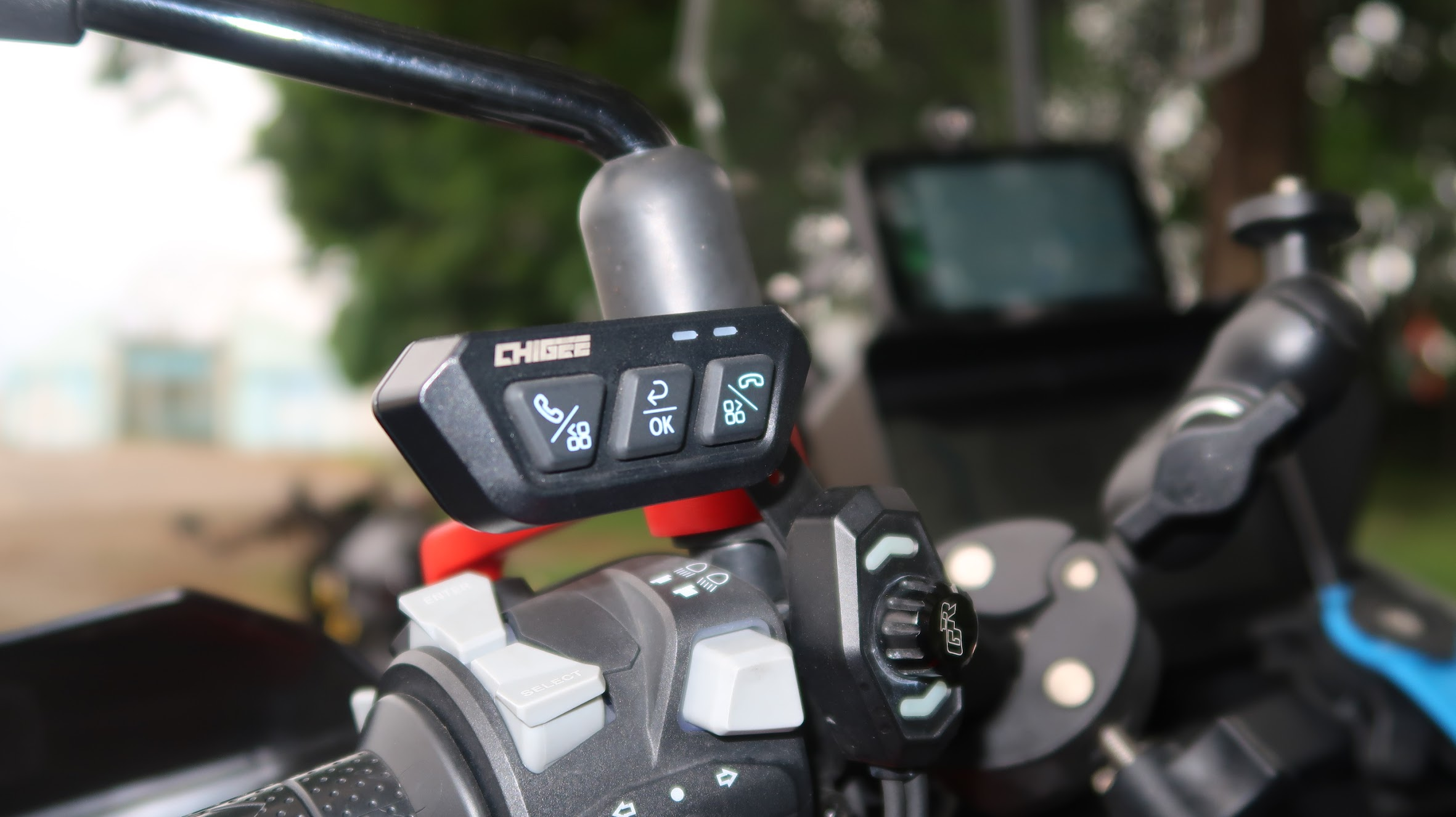
TPMS sensors are optional on both units at $94 each for either internal or external versions. The CGRC Pro Wireless Remote is a separate $98 accessory that works with both units equally. Standard aftermarket extras like sun shades, screen protectors, silicone cases, and mounting alternatives (crossbar mounts, fork stem mounts, RAM ball adapters) are all separate purchases on both sides.
Difference 1: Camera Sensor
Both units record at 1080p 30 FPS with HDR, but the underlying sensors are different between them. The Lite ships with Sony IMX307 STARVIS sensors in both front and rear cameras, drawing on Sony’s low-light-optimized CMOS line. The EVO uses dual 1080p cameras at the same resolution and framerate, but without the STARVIS designation.
STARVIS is Sony’s sensor family built specifically for low-light imaging, widely used in dashcams, security cameras, and surveillance systems for a reason. The sensor architecture captures more detail in mixed lighting and night conditions than standard CMOS sensors at the same resolution. On a motorcycle, this translates to better license plate legibility and road surface clarity during night rides, tunnel transitions, and poorly lit provincial roads.
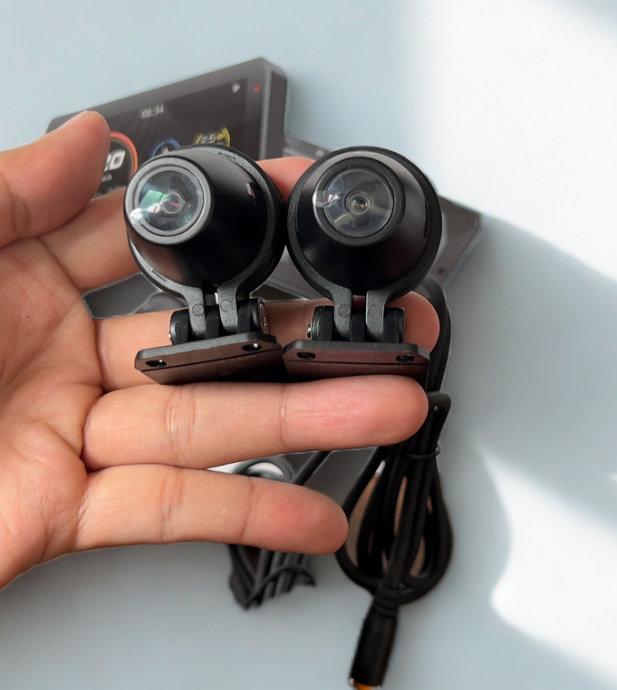
In daytime conditions, the difference between the two units is marginal and most riders will not notice it in normal use. The gap shows up after dark or in high-contrast environments where sensor tuning decides whether footage is useful or just noisy. If night recording quality is a top priority for how you plan to use the dashcam, the Lite has a real edge here.
Difference 2: Internal Storage
The Lite ships with 32 GB of EMMC internal storage for OS, settings, and firmware. The EVO has no internal storage at all, relying entirely on the microSD card you insert. This single difference accounts for a meaningful portion of the price gap between the two units.
On the EVO, the microSD card is mandatory from day one, not just for dashcam video but for firmware updates and OS-level operations. Without a card inserted, the unit cannot perform OTA updates and the cameras will not record. CHIGEE explicitly recommends a U3-grade card, with a 128 GB card being the sweet spot for most riders.
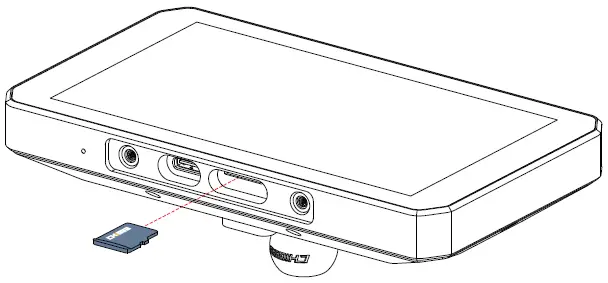
On the Lite, the unit boots, updates, and runs navigation even without an SD card because the internal 32 GB handles system operations. You still need a card for dashcam footage, since video recording writes to the SD card on both units. The internal storage is a convenience buffer, not a replacement for the SD card you’ll want anyway.
Difference 3: Waterproofing
The Lite is rated IP67, which means dust-tight and protected against temporary submersion in water. The EVO is rated IP69K, which adds resistance to high-pressure, high-temperature water jets on top of IP67-level protection. On paper, both ratings clear the bar for normal motorcycle use in rain and occasional splashing.
IP69K is the highest waterproof rating commonly available on consumer electronics, originally developed for vehicles that undergo steam-jet cleaning. In motorcycle context, it means the unit can withstand direct high-pressure water like you’d get from pressure washing or riding at highway speed into heavy rain. The EVO is essentially overbuilt for the actual conditions most riders will face, which is a good problem to have.
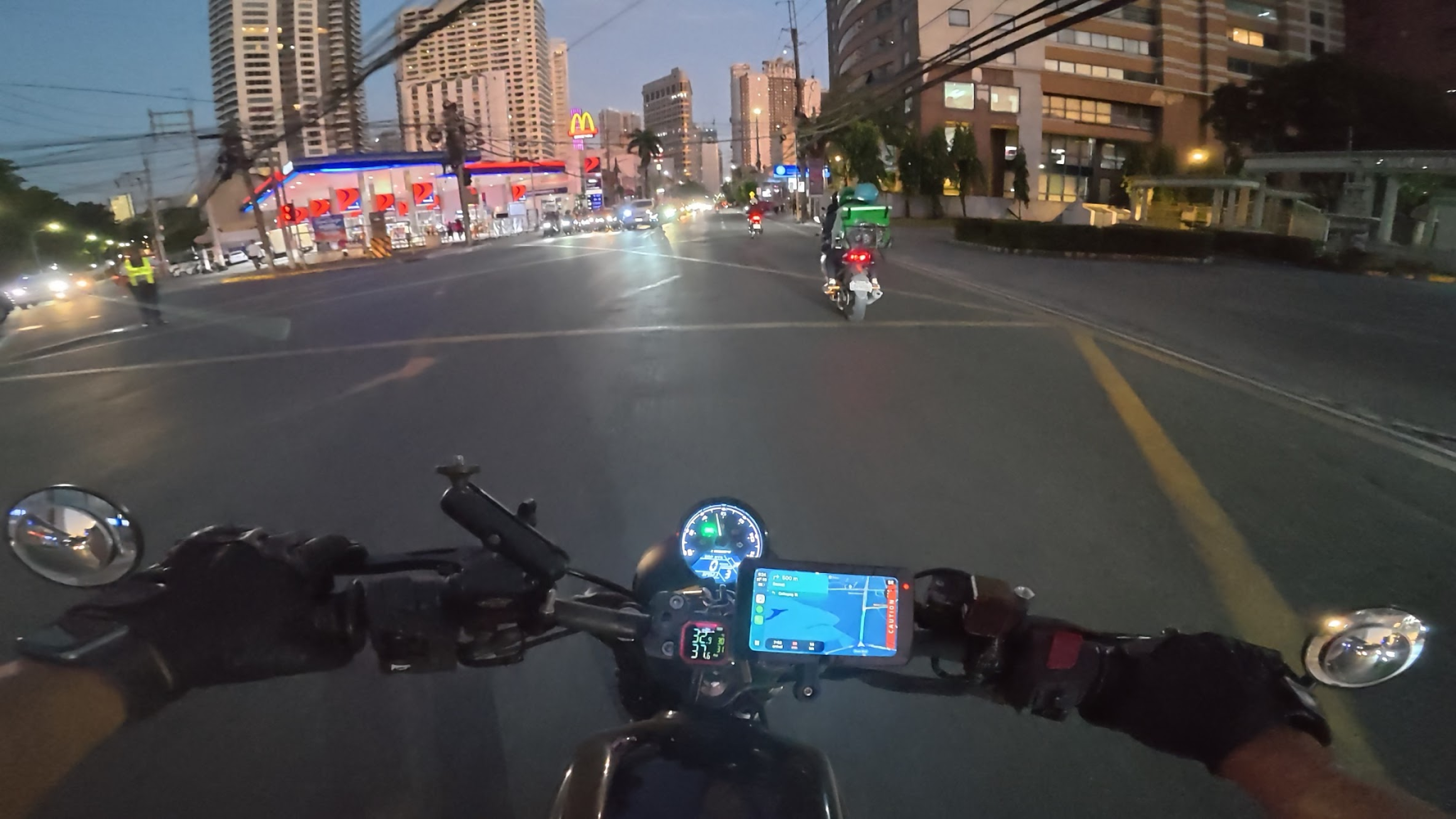
For riders in the Philippines where monsoon season isn’t optional, that IP69K headroom matters even if the rating looks excessive on a spec sheet. Highway speed plus heavy rain produces water pressure closer to a jet than a soak, and cheaper units start failing at that point. Both units will survive a normal downpour, but the EVO has more margin when the weather turns into a proper storm.
Go fully connected with the CHIGEE AIO-6 LTE review LTE, bright display, and advanced ride data.
Difference 4: BMW and CAN/LIN Module Compatibility
The Lite is compatible with CHIGEE’s full module ecosystem: CGRC LIN for BMW ($125) for data access and Wonder Wheel control, CGRC CAN for BMW ($99), and the CG OBD Module ($109) for engine data on non-BMW bikes. These modules unlock features like reading engine RPM, gear position, fuel data, and controlling the display through the bike’s native controls. None of these modules are included in the box, but the Lite has the hardware support to use them if you buy them separately.
The EVO does not support any of these modules at all. CHIGEE explicitly states the EVO cannot connect to CGRC CAN or CGRC LIN modules, and the OBD module integration is not available either. The unit can still be mounted on a BMW and all core features will work, but engine data readout and Wonderwheel control are off the table.
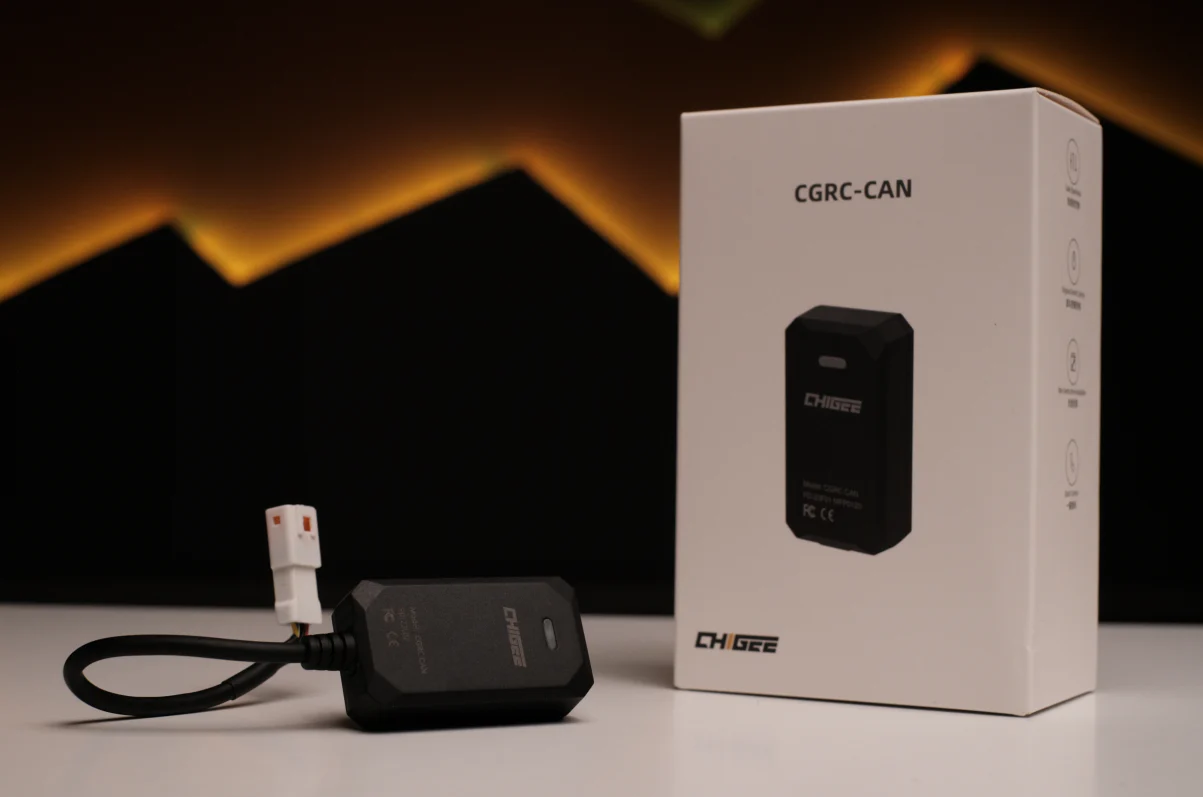
If you ride a BMW (R1200, R1250, K1600, or similar) and want Wonder Wheel integration or engine data on the display, the Lite is your entry point into that ecosystem, or you can step up to the AIO-6. If you ride a non-BMW bike and don’t care about OBD data, the CGRC limitation on the EVO is invisible to you. This single difference is what defines the EVO as a non-BMW rider’s product and the Lite as the module-friendly option.
Difference 5: Minor Software Differences
The Lite includes a sunrise and sunset display widget showing daily golden-hour times for your location. The EVO has this widget removed as part of the feature simplification from the AIO-6 base. For most riders this will not matter, but if you plan dawn rides or shoot content around golden hour, it’s a small convenience you lose.
Automatic brightness continues to work on both units, adjusting the screen for ambient light without rider input. Day and night switching in screen mirroring mode also works on both, so CarPlay and Android Auto will shift their color schemes appropriately. The EVO simplification is specifically the standalone widget, not the broader day/night logic of the system.
This is genuinely minor stuff and shouldn’t drive your buying decision on its own. It’s worth knowing about if you’re a rider who actively uses the sunrise/sunset data to plan routes or content shoots. For everyone else, the widget absence on the EVO will be invisible in normal use.
Ride smarter with the refined CHIGEE AIO-5 Evo review CarPlay, dual cams, and BSD in one sleek setup.
What Doesn’t Differ Despite the Price Gap
It’s worth being explicit about what’s identical between the two units, because this is where most comparisons overstate the Lite’s advantages. Screen specs are the same: both are 5-inch IPS at 1280×720 with 1200-nit peak brightness. Camera resolution and framerate are the same at 1080p 30 FPS with HDR, though the sensor differs as noted above.
GPS is the same external 10 Hz module supporting GPS and BeiDou satellites on both units. Blind Spot Detection, parking monitoring, and action camera integration all cover the same feature set. RAM, processor, operating system, Bluetooth version, Wi-Fi bands, and operating temperature range are all identical.
The EVO isn’t a stripped-down Lite. The real deltas are camera sensor, internal storage, waterproof rating, and module compatibility. Everything else is functionally the same product.
Head-to-Head Spec Table
| Feature | AIO-5 EVO | AIO-5 Lite |
|---|---|---|
| Lineup positioning | Lightweight flagship (AIO-6 derived) | All-in-one with BMW compatibility |
| Screen | 5″ IPS, 1200 nits, 1280×720 | 5″ IPS, 1200 nits, 1280×720 |
| Cameras | Dual 1080p + HDR | Dual 1080p Sony IMX307 STARVIS + HDR |
| Video frame rate | 30 FPS | 30 FPS |
| Waterproof rating | IP69K | IP67 |
| Internal storage | None, microSD required | 32 GB EMMC |
| SD card expansion | Up to 256 GB (required) | Up to 256 GB (required for video) |
| GPS | External module (10 Hz, GPS + BeiDou) | External module (10 Hz, GPS + BeiDou) |
| Blind Spot Detection | Yes | Yes |
| Parking monitoring | Yes | Yes |
| Action cam integration | DJI / Insta360 / GoPro | DJI / Insta360 / GoPro |
| CGRC CAN (BMW) | Not supported | Optional ($99) |
| CGRC LIN (BMW) | Not supported | Optional ($125) |
| OBD Module | Not supported | Optional ($109) |
| TPMS sensors | Optional ($94) | Optional ($94) |
| Wireless remote | Optional ($98) | Optional ($98) |
| CarPlay / Android Auto | Wireless, auto-reconnect | Wireless, auto-reconnect |
| Bluetooth | Dual audio (BLE 5.0) | Dual audio (BLE 5.0) |
| Wi-Fi | 2.4 / 5 GHz | 2.4 / 5 GHz |
| RAM / Processor | 4 GB / Arm Cortex-A53 1.2 GHz | 4 GB / Arm Cortex-A53 1.2 GHz |
| OS | CGOS (Linux) | CGOS (Linux) |
| Sunrise / sunset widget | Removed | Included |
| Price position | More affordable | US$598 |
Who Should Buy the EVO
The AIO-5 EVO makes sense for riders who want the same core experience as the AIO-6 and AIO-5 Lite at a lower price, and who can live without the module ecosystem. You’re on a non-BMW bike, you don’t need OBD engine data on the display, and you ride in heavy rain often enough that the IP69K rating matters to you. If camera sensor tuning isn’t your top priority, the EVO gives you the same screen, same BSD, and same action cam integration at a lower starting price.
Who Should Buy the Lite
The AIO-5 Lite makes sense for riders who want flexibility to expand into CHIGEE’s module ecosystem. You ride a BMW and want the option to add CGRC LIN for Wonder Wheel control, or you want the CG OBD Module for engine data on your bike. You want the Sony IMX307 STARVIS sensor specifically for better low-light camera performance, plus 32 GB of internal storage so the unit runs OS-level operations without an SD card inserted.
When Neither AIO-5 Is the Right Call
Some riders should skip both. If you want CGRC CAN/LIN support, the brightest possible screen, and quick-release mounting, step up to the AIO-6 Max or AIO-6 LTE, which run 2300 nits, IP69K, and support the full module ecosystem. If you ride a BMW with a native GPS cradle, the AIO-5 Play BMW Edition is plug-and-play, and for minimalist cockpits the XR-2 at 4.3″ is a tighter fit.
See the durability in this CHIGEE XR-2 long-term review after months of daily riding.
Final Take
The AIO-5 EVO and AIO-5 Lite aren’t really competitors. They’re two products with significant shared DNA and four actual splits: camera sensor, internal storage, waterproof rating, and BMW/CAN/LIN compatibility. Everything else is functionally the same product.
The EVO is the smart value play for non-BMW riders who don’t need OBD integration. You get the full AIO-6-derived core experience with better waterproofing at a lower price, and the tradeoffs (no internal storage, no CGRC support, non-STARVIS camera sensor) are invisible unless you actually need the features that were removed. For my money on a daily urban bike with an action cam in the mix, the EVO is the sharper choice.
CHIGEE AIO-5 EVO
The AIO-5 Evo is a 5-inch motorcycle smart riding display with built-in dual 1080p front and rear cameras, wireless CarPlay and Android Auto, blind spot detection, 10Hz GPS, and IP69K waterproofing. It is the more accessible entry point into CHIGEE's AIO-5 family, sitting below the AIO-5 Lite in the lineup. The key difference: no internal storage. You will need your own microSD card.
CHIGEE AIO-5 LITE
A compact, handlebar-mounted CarPlay/Android Auto display designed for versatile use across motorcycles paired via Bluetooth with external tire pressure sensors for real-time safety monitoring and seamless ride data integration.
The Lite is the module-friendly choice for riders who want flexibility to expand. You get the Sony IMX307 STARVIS sensor for better night camera performance, 32 GB of internal storage, and the option to add CGRC and OBD modules later. For a BMW tourer, a rider who prioritizes night camera quality, or a rider who wants OBD data, the Lite (or the AIO-6) is the one that keeps the options open.
Great detailed info! Thanks a lot!
Thanks Brother!