Every group ride eventually hits the same wall. Someone’s intercom didn’t pair before the departure, someone else paired to the wrong helmet, and the rider at the back of the convoy hasn’t heard a single call for the past 45 minutes.
You stop, you re-pair, you repeat. By the time the intercoms are sorted, the coffee stop that was supposed to be relaxing has turned into a debugging session in a gas station parking lot.
I have been using Sena intercom systems across two different helmet integrations: the Sena SRL3 inside a Shoei GT-Air 3 and the Schuberth SC2. The experience they both share is something I never expected from a communication device: it stops being something you think about.
You helmet up, you press one button, and you ride. After years of wrestling with systems that required a specific tap sequence just to connect more than two riders, discovering what Sena’s Mesh Intercom actually does to your pre-ride routine makes the price tag start looking very reasonable very fast.
Sena Intercom
Sena intercoms are premium motorcycle communication systems designed to keep riders connected, informed, and safe on the road. Built with advanced Bluetooth and Mesh Intercom technology, Sena devices allow seamless rider-to-rider and rider-to-passenger communication even at long distances and high speeds.
This is not a spec sheet walkthrough. This is what two Sena helmet integrations actually feel like to install, to pair, and to use. On the road, in group formations ranging from two riders to more than a dozen, in the rain and heat this country throws at you every other afternoon. At the end, a straight answer to the question every rider actually wants answered: which Sena unit should you get?
The Problem with Group Riding Communication
Most riders who have tried intercoms before Mesh technology know exactly how it goes. Bluetooth intercom operates peer-to-peer: Rider A pairs to Rider B, B to C, C to D. A chain that fragments the moment one link drops.
For two riders that is manageable. For a group of six or more, maintaining that chain at speed across varying distances and formations is more work than it should be. Nothing kills pre-ride energy faster than half the group stuck in a pairing loop while the other half waits, already geared up and warming up their engines.

The second problem is pairing itself. Budget and mid-tier systems often require holding specific button combinations in precise sequences, and if you get the timing wrong you start over from scratch.
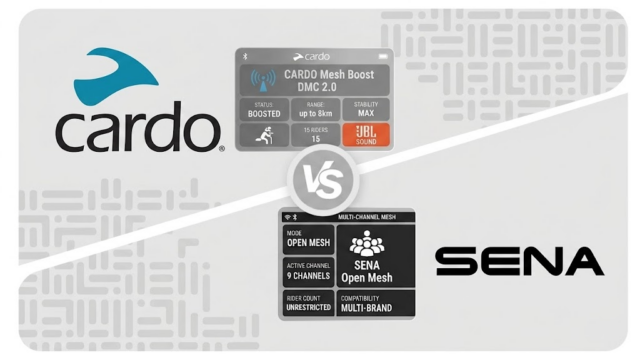
Mesh Intercom solves both problems at the level. Instead of chaining devices together in a fixed sequence, every Mesh unit in range joins a shared dynamic network automatically. No chain, no pairing order, no sequence to memorize. Just one button press, and everyone who is in range and running Sena Mesh is in the conversation.
Mesh Pairing: One Button, No Parking Lot Ritual
In Open Mesh mode, every Sena Mesh unit in range connects to the same shared channel automatically. Press the Mesh button, the unit announces “Mesh On,” and anyone within range running a Sena Mesh system joins the conversation. No pairing list, no master unit, no sequence.
It does not matter whether someone in your group is running the SC2, the SRL3, the budget E30, or the flagship 60S. They all share the same Mesh network, and that cross-model compatibility is not something you configure. It is how the system works by default, right out of the box.
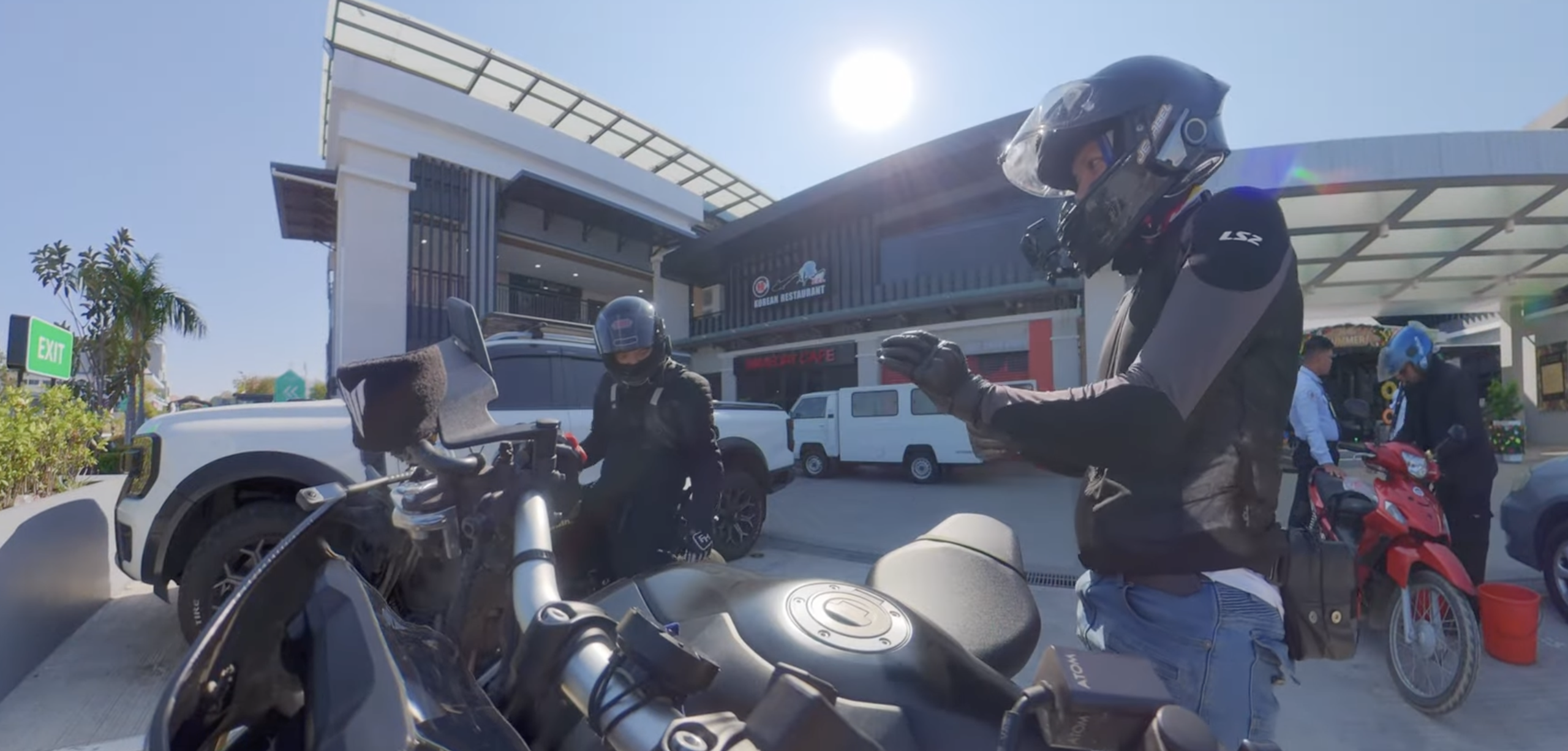
Neo Moto and Jejabel demonstrated this perfectly in a recent reel: different Sena models, one group, one conversation, instant connection. Kahit magkakaibang model, pwede mag connect. No pre-ride pairing ceremony. No matching units. Just riders, helmets, and one shared channel that opened the moment everyone switched Mesh on.
For a group where riders have invested at different price points across different helmet platforms, this cross-model compatibility removes what would otherwise be a significant logistical headache before every departure.
For rides where you want a closed conversation, Group Mesh lets you create a private channel of up to 24 participants that other Mesh users nearby cannot join uninvited. Useful for organized ride coordination when operating in the same area as other groups.
The connection is also self-healing. If a rider temporarily drops signal by pulling ahead, entering a tunnel, or getting separated at a junction, the unit reconnects automatically when back in range, without any rider input. No one pulls over, no one re-pairs, and the convoy keeps moving.
Performance on The Road
On a group ride with ten or more bikes, the difference between Sena’s Mesh 2.0 and regular Bluetooth intercom is hard to miss. The lead rider calls out a hazard or a lane change, and every rider hears it at the same time no matter where they are in the group. No delay, no missed calls, no “ano? hindi ko narinig” from the riders at the back.
For convoy riding on SLEX, NLEX, or any busy expressway, this is the difference between communication that works and communication that almost works. Hazard calls and exit announcements reach the whole group at once, not just the riders up front. That alone makes Mesh 2.0 the better choice for big group rides.
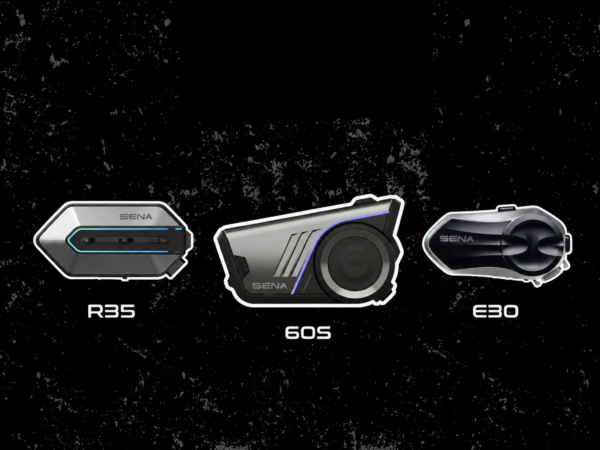
Audio quality stays clear even at highway speed across the whole Sena lineup. Whether your group is on the 60S, the R35, or the more budget-friendly E30, you can still hear each other well enough to plan route changes and fuel stops. On my end, both the SRL3 and the SC2 performed just as well, so the quality is consistent no matter which unit your group picks.
One thing worth knowing before buying a carbon fiber helmet: the material weakens the signal and cuts Mesh range from 2 kilometers down to about 400 meters. This has nothing to do with the intercom itself, it is just how carbon fiber behaves with radio signals. For riders on regular helmets, range is not something you will ever need to worry about on a typical group ride.
Which Sena Should You Get?
This is the question that actually matters, and the honest answer is that it depends on which helmet you ride and what you prioritize. Here is a straight breakdown of every current Sena unit and where each one actually belongs.
Sena E30 — Best for: Budget group riders who ride often
The E30 is Sena’s most accessible Mesh intercom, and it is genuinely impressive for what it costs. It runs Mesh 3.0, connects to an unlimited number of riders in Open Mesh across 9 public channels, supports a closed group of up to 24, and carries a 15-hour Mesh intercom battery, the longest in its price tier.
It is IP67 waterproof, weighs just 50 grams, and supports OTA firmware updates through the Sena Motorcycles App. What it does not have is Wave Intercom. Cellular-range communication is not part of the E30’s feature set
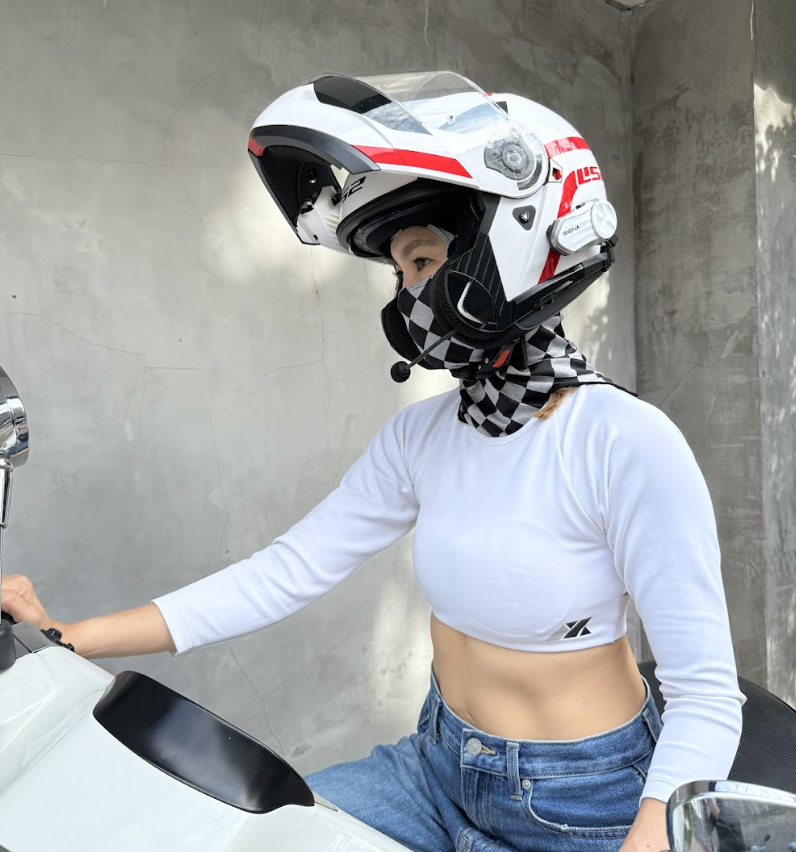
For most local group rides, that is not a gap that matters in practice. If your group stays within a few kilometers of each other on a typical ride, the E30’s Mesh range is more than sufficient. The E30 is the answer if your priority is Mesh intercom for the lowest entry cost, with the best battery life in the category.
Sena R35 — Best for: Riders who want Wave on a mid-range budget
The R35 is Sena’s newest mid-range unit and the budget entry point into Wave Intercom territory. It runs Mesh 3.0 and Mesh 2.0 for backward compatibility, uses Bluetooth 5.3, and brings AI-based noise suppression and echo cancellation, a step up from the E30’s processing. Speaker output is approximately +5 dB louder than the 50S, which means audio at highway speed is noticeably cleaner.
Wave Intercom on the R35 means your group stays connected beyond Mesh range through your phone’s cellular data. If your riding group does longer highway runs where the formation naturally spreads out, or if someone regularly gets separated and needs to stay in contact, Wave is the insurance policy worth having.
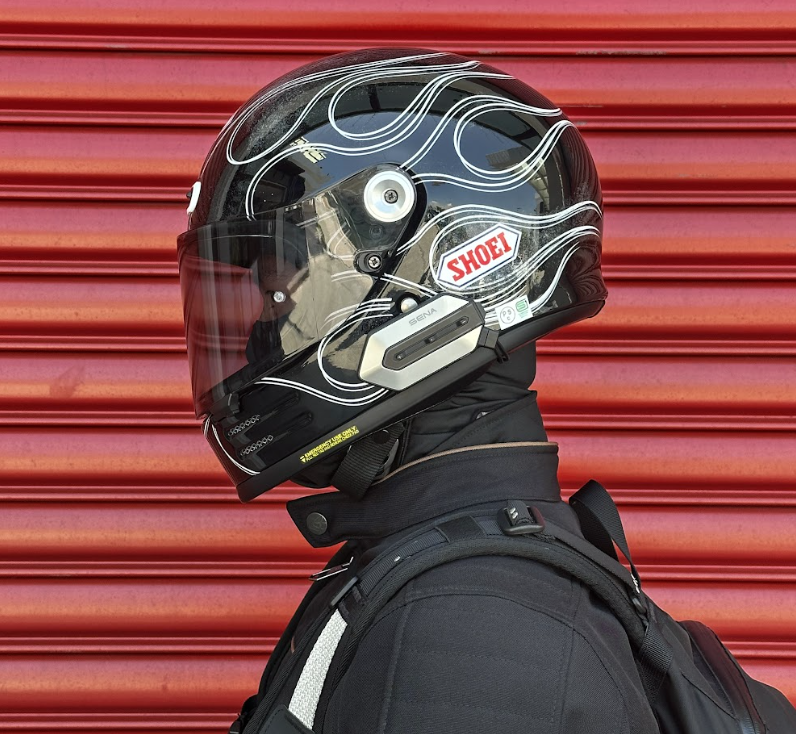
The R35 is the answer if you want the full Sena feature set: Mesh 3.0, Wave, AI noise processing, without paying flagship money.
Schuberth SC2 — Best for: Schuberth helmet owners who want seamless integration
The SC2 is not a standalone unit. It is a helmet-integrated system built exclusively for compatible Schuberth helmets: the C5, C5 Carbon, S3, E2, and J2. If you ride one of those, the SC2 is the cleanest intercom solution available on any platform.
Speakers, antennas, and microphone are pre-installed at the factory. You slot in the module, click it into place, and it is done. No external housing, no bracket, no compromise to the helmet’s aerodynamic profile.
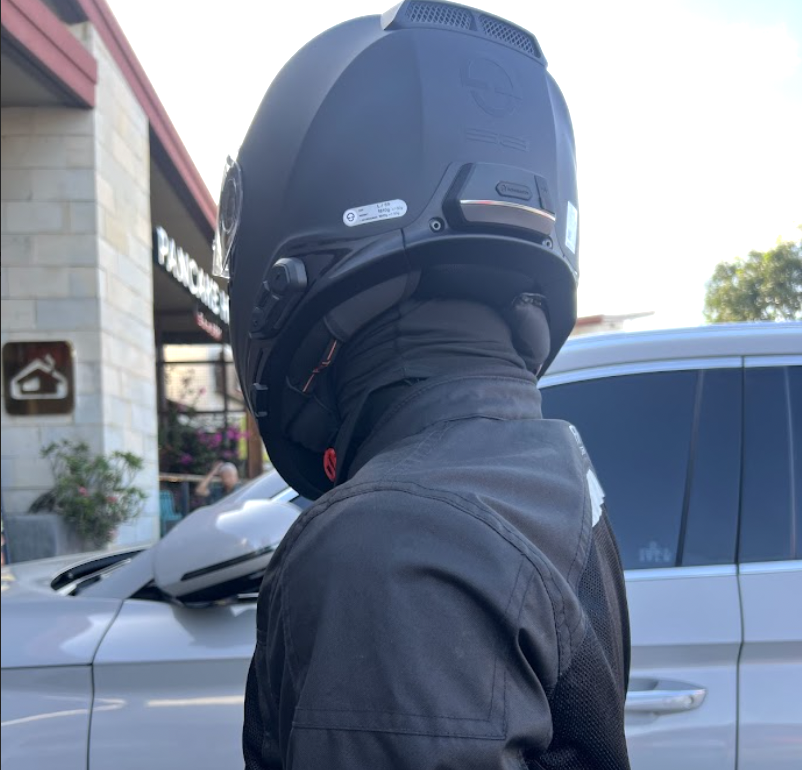
After the May 2025 firmware update, the SC2 now runs Mesh 3.0 and Wave Intercom, meaning it is functionally current with newer Sena units in every way that matters for group riding. The SC2 is the answer specifically for Schuberth riders who want Sena’s full Mesh ecosystem without any of the installation overhead that comes with a universal unit.
Sena SRL3 — Best for: Shoei helmet owners, specifically Neotec 3 and GT-Air 3
The SRL3 is the Shoei-integrated equivalent of the SC2, built for the Shoei Neotec 3, GT-Air 3, and J-Cruise 3 — the GT-Air 3 is exactly the helmet I ran it in. Same principle: speakers, antennas, and microphone are pre-built into the helmet at the factory, and the SRL3 module slides into its dedicated recess at the rear. Installation is a five-minute process that produces a result that looks and feels factory-built because it essentially is.
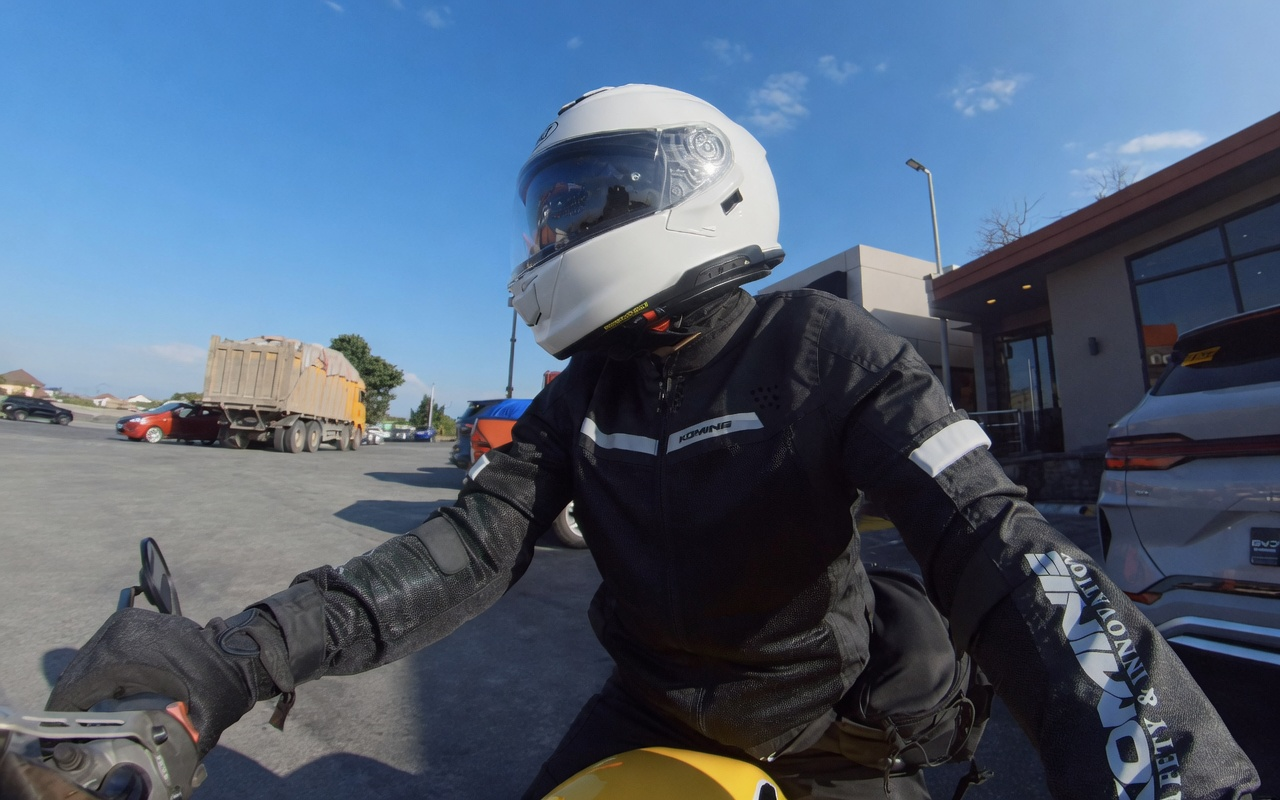
The SRL3 runs Mesh 3.0 and connects to the same network as every other Sena Mesh device, which means your group’s SC2, E30, R35, and 60S users are all in the same conversation.
If you ride a Shoei GT-Air 3 or Neotec 3, the SRL3 is not just the best option. It is the one the helmet was built for. Audio quality through the GT-Air 3’s interior is solid, voice communication at highway speed is clear, and the integration is genuinely invisible from the outside.
Sena 60S — Best for: Riders who want the absolute best, no compromises
The 60S is Sena’s current flagship, and it earns that position through a combination of features no other unit in the lineup matches. It runs Mesh 3.0 and Mesh 2.0, uses Bluetooth 5.3, and is built around second-generation Harman Kardon 40mm speakers that deliver up to 30% more volume than the 50S.
Wave Intercom is built in, enabling cellular-range communication for unlimited riders. Battery life hits 17 hours on Mesh and 24 hours on Bluetooth. It charges fully in 1.5 hours via USB-C and is rated IPX7 waterproof, fully submersible.
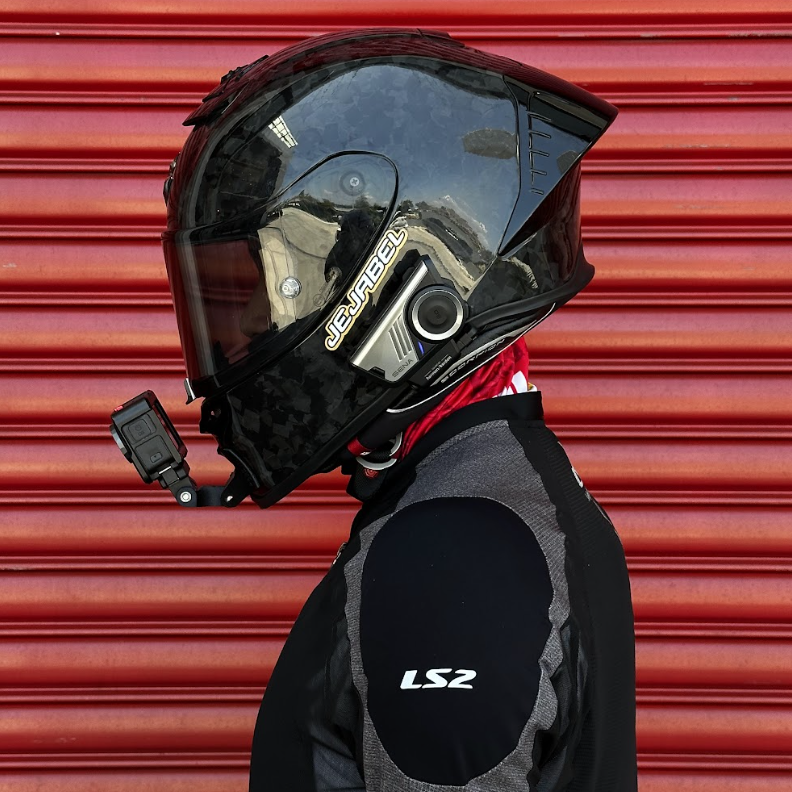
The 60S also comes with dual helmet kits in the box, meaning you can outfit two helmets from a single purchase. It includes a built-in flashlight, a Dynamic Motion LED status bar, magnetic helmet mounting, and OTA firmware updates over Wi-Fi, Bluetooth, or cellular, no computer required.
The 60S is the answer if you want Sena’s best audio, best battery, best waterproofing, and the full Wave Intercom experience, and budget is not the primary constraint.
Final Verdict
Sena Mesh Intercom, across all its platforms, delivers on the most important promise a communication system can make: it stops being something you notice.
Installation on both the SRL3 and SC2 is genuinely plug-and-play, Mesh pairing requires one button press, and cross-model compatibility means your group does not need to standardize on the same unit to stay connected. For group riding, the heat, the rain, the convoy sizes, the expressway runs, this is the system that works the way communication was always supposed to.
Sena Intercom
Sena intercoms are premium motorcycle communication systems designed to keep riders connected, informed, and safe on the road. Built with advanced Bluetooth and Mesh Intercom technology, Sena devices allow seamless rider-to-rider and rider-to-passenger communication even at long distances and high speeds.
If you are a Schuberth rider, get the SC2. If you are on a Shoei GT-Air 3 or Neotec 3, get the SRL3. If you want Mesh on a tight budget with outstanding battery life, get the E30. If you want Wave Intercom at a mid-range price, get the R35. If you want Sena’s best, no questions asked, get the 60S.
Every unit in the lineup connects to the same network. The only question is which platform makes sense for how you ride and what you ride in.
The parking lot re-pairing ritual is over. This is what riding connected is actually supposed to feel like.