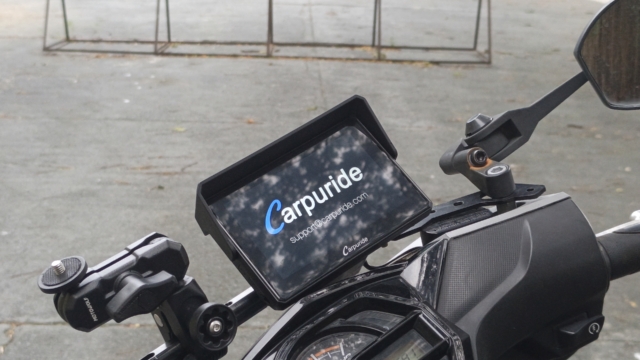
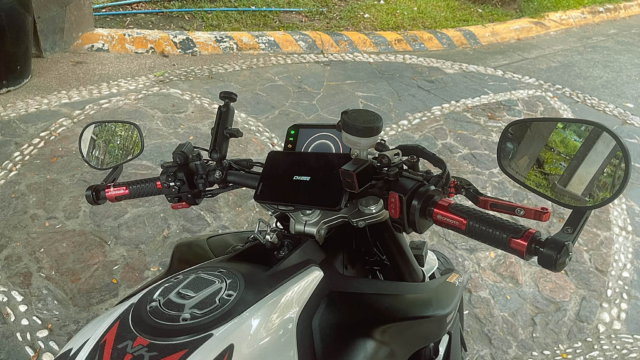
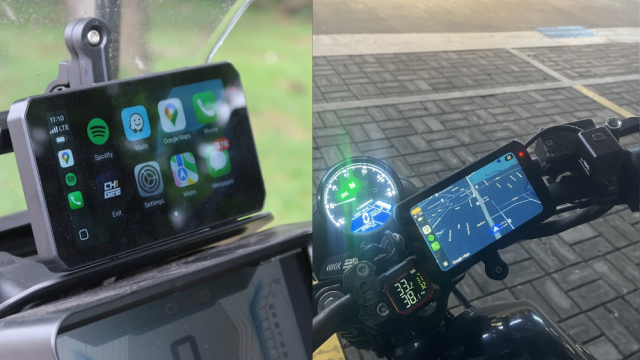
Two 5-inch CarPlay screens have spent time on my bikes this year, and they could not be built around more different ideas. The CHIGEE AIO-5 EVO rode with me on the Keeway CR152 through Metro Manila traffic, while the Carpuride W502S Pro + TPMS went on my scooter for daily commutes. On paper they look like rivals, but after living with both, I think they are answering two different questions.
The EVO asks what happens if something goes wrong on the road, which is why it packs dual dashcams and blind spot detection. The Carpuride asks what you need to know about your bike before something goes wrong, which is why its headline feature is tire pressure monitoring. Neither answer is wrong, and the right one depends on how and where you ride.
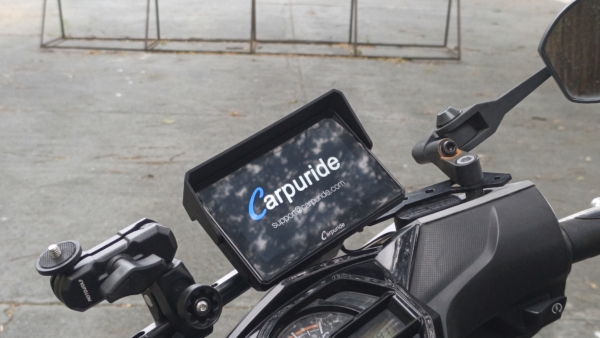
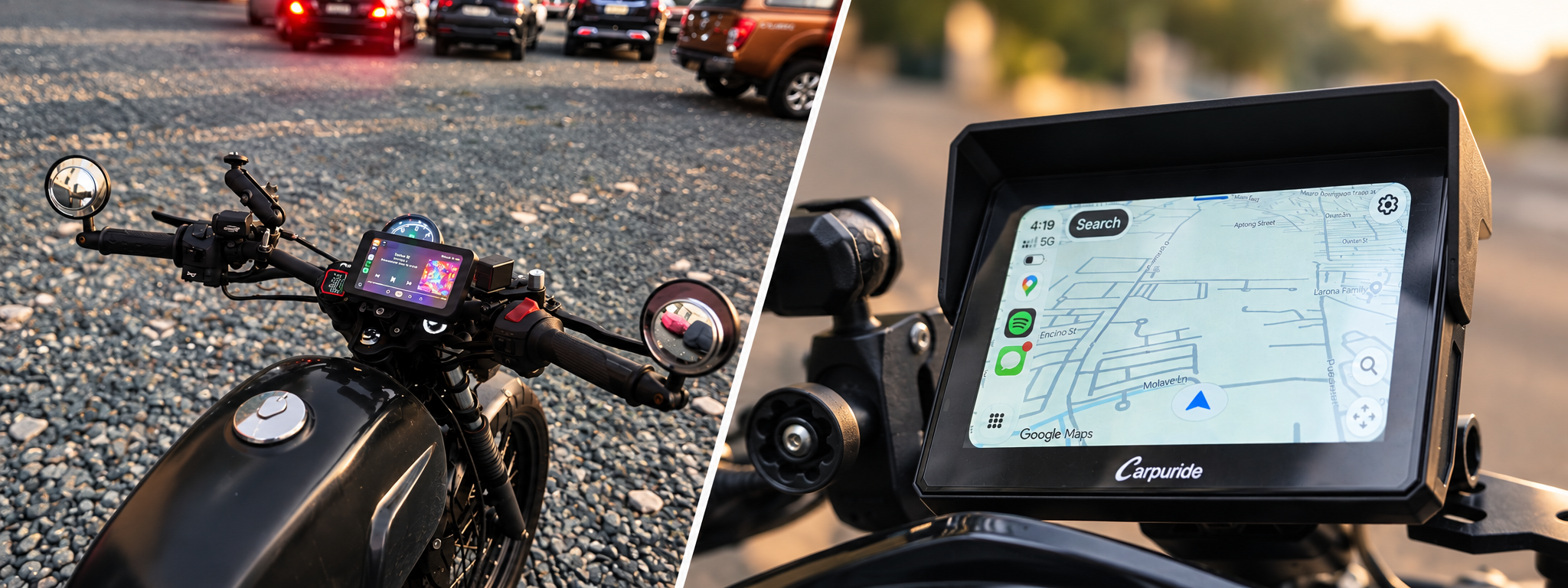
Carpuride W502S Pro + TPMS
A 5-inch waterproof CarPlay/Android Auto display with two mounting options—a square bracket and a 360° ball mount—plus wireless connectivity and an optional TPMS system for real-time tire pressure and temperature monitoring.
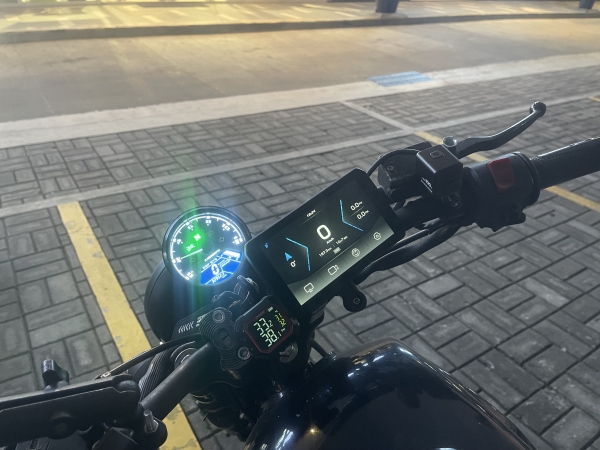
CHIGEE AIO-5 EVO
The AIO-5 Evo is a 5-inch motorcycle smart riding display with built-in dual 1080p front and rear cameras, wireless CarPlay and Android Auto, blind spot detection, 10Hz GPS, and IP69K waterproofing. It is the more accessible entry point into CHIGEE's AIO-5 family, sitting below the AIO-5 Lite in the lineup. The key difference: no internal storage. You will need your own microSD card.
So this is not a “winner takes all” piece where one screen gets crowned and the other gets buried. I’ll lay out where each one is stronger, where each one falls short, and what you actually end up paying. By the end, you should know which one belongs on your bars, not which one I happen to like more.
Quick Verdict
Get the CHIGEE AIO-5 EVO if you want your screen to double as an incident recorder, with dual 1080p dashcams, blind spot detection, IP69K sealing, and action camera GPS logging in one unit. It costs more, it needs a hardwired install, and you must buy a U3 microSD card before it will record anything.
Get the Carpuride W502S Pro + TPMS if your priority is a responsive CarPlay screen with live tire pressure and temperature, and you want to be riding the same afternoon. It is cheaper, it runs off USB, and TPMS is part of the package, but there is no dashcam or blind spot warning in this setup.
If you already run a separate dashcam like a CHIGEE XR-1 or XR-2, the Carpuride’s value case gets much stronger. If you have no camera on your bike at all, the EVO covers two jobs with one purchase, and that changes the math in its favor.
Specs Side by Side
| Feature | CHIGEE AIO-5 EVO | Carpuride W502S Pro + TPMS |
|---|---|---|
| Official price (Sept 2026) | US$499 | US$369.90 with TPMS (US$349.90 without) |
| Screen | 5-inch, 1280×720, 1200 nits | 5-inch IPS, 800×480, 1000 nits |
| CarPlay / Android Auto | Wireless, up to 60fps mirroring | Wireless |
| Dashcam | Dual 1080p front + rear, included | None |
| Blind spot detection | Yes, visual + audible alerts | No |
| Parking mode | Yes, vibration-triggered 30-second clips | No |
| TPMS | Optional sensors, US$94 | 2 sensors included in TPMS version |
| Other sensors | 10Hz GPS (external module) | Compass, barometer, light sensor; lean angle in my test |
| Action cam integration | DJI, Insta360, GoPro control + GPS overlay | No |
| Headsets | One headset, paired through your phone | Dual Bluetooth, two headsets + rider-passenger intercom |
| Controls | Touchscreen | Touchscreen + wired handlebar button |
| Water rating | IP69K | IP67 |
| Power | Hardwired only | USB or hardwired |
| Memory card | U3 microSD required | Optional, for music |
| Mounting (as tested) | 17mm ball-head handlebar mount | Square bracket + 360° ball mount |
| Warranty | 1-year replacement, 30-day returns | 2 years, 30-day returns |
| Tested on | Keeway CR152 | Scooter |
Prices are from the official stores as of September 30, 2026, and both brands run promos often, so check the cart total before you buy. Sources: CHIGEE AIO-5 EVO product page, Carpuride W502S Pro product page, and my AIO-5 EVO and W502S Pro + TPMS reviews.
Price: What You Actually Pay
The sticker price favors the Carpuride, which sells for US$369.90 with TPMS or US$349.90 without it on Carpuride’s official store. The AIO-5 EVO is US$499 on CHIGEE’s store, with no tire sensors included. That’s a gap of about US$130 before you add anything to either unit.
The gap widens if you want the same features on both. The EVO needs a U3 microSD card from day one, and CHIGEE’s TPMS sensors add another US$94, putting a comparable setup above US$600. The Carpuride, meanwhile, has no dashcam, so matching the EVO’s recording ability means buying a separate camera system.
My honest read is that each one is the better value for a different rider. If you only want CarPlay plus tire pressure, the Carpuride gets you there for much less. If you want a screen, front and rear dashcams, and BSD in one box, the EVO costs less than buying those pieces separately.
Screen and Daily Use
Both screens stayed readable under Manila noon sun without me cupping a hand over them. The EVO has the sharper panel on paper, at 1280×720 and 1200 nits versus the Carpuride’s 800×480 and 1000 nits, and you can see the extra detail in map text. The Carpuride’s ambient light sensor still ramps brightness smoothly when riding in and out of shade.
Audio and controls are where the Carpuride pulls ahead. It connects to two Bluetooth headsets at once with a rider-passenger intercom, and it ships with a wired handlebar button for switching screens and answering calls. The EVO pairs your headset through your phone and supports one headset at a time, but it mirrors CarPlay at up to 60fps and reconnects automatically on startup.
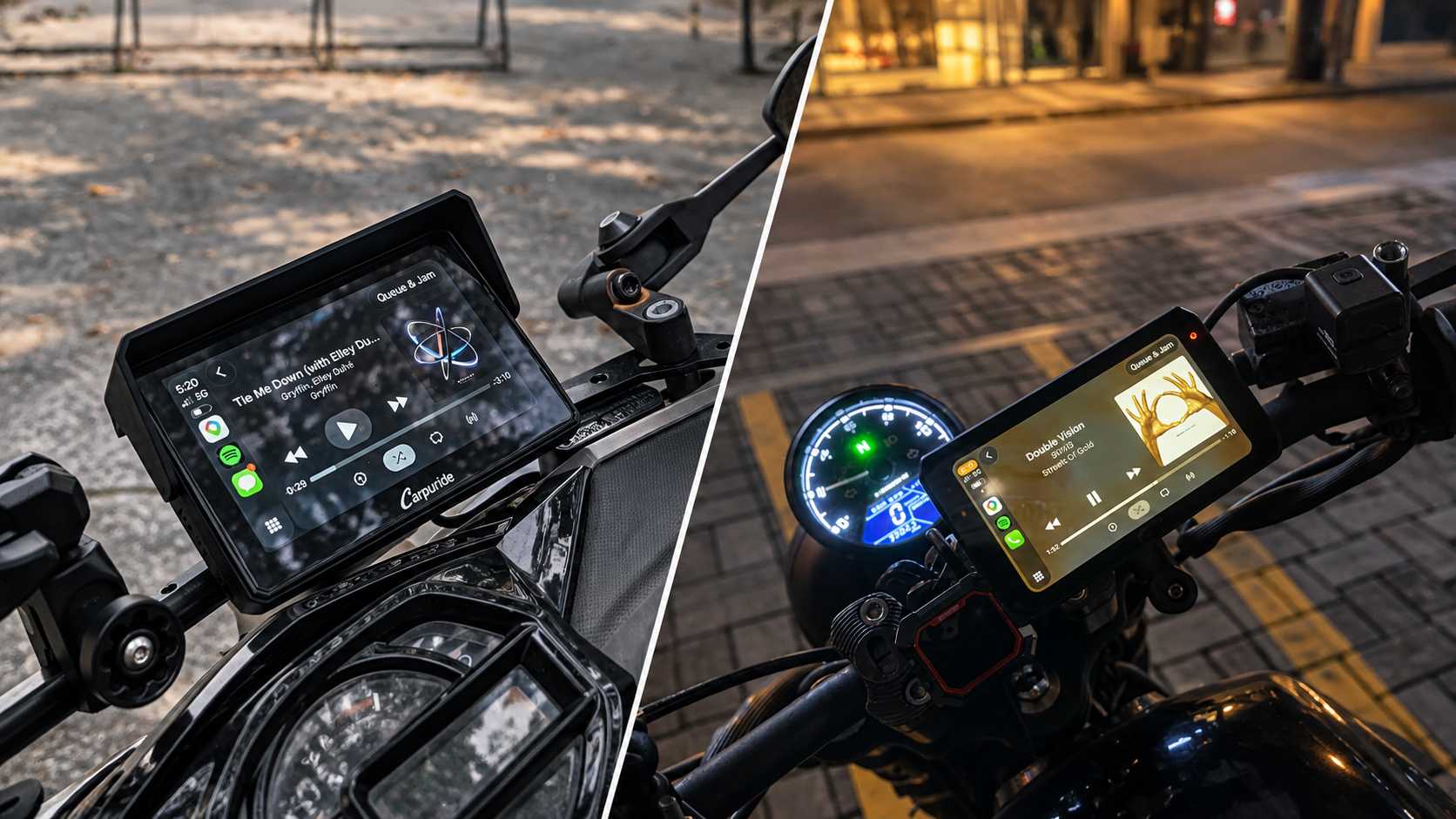
The shared weakness is size. At 5 inches, map text on both takes a little more focus to read at a glance, especially at night. If your cockpit has the room and legibility is your top priority, a bigger screen from either brand is worth a look.
Cameras and Blind Spot Detection: EVO’s Territory
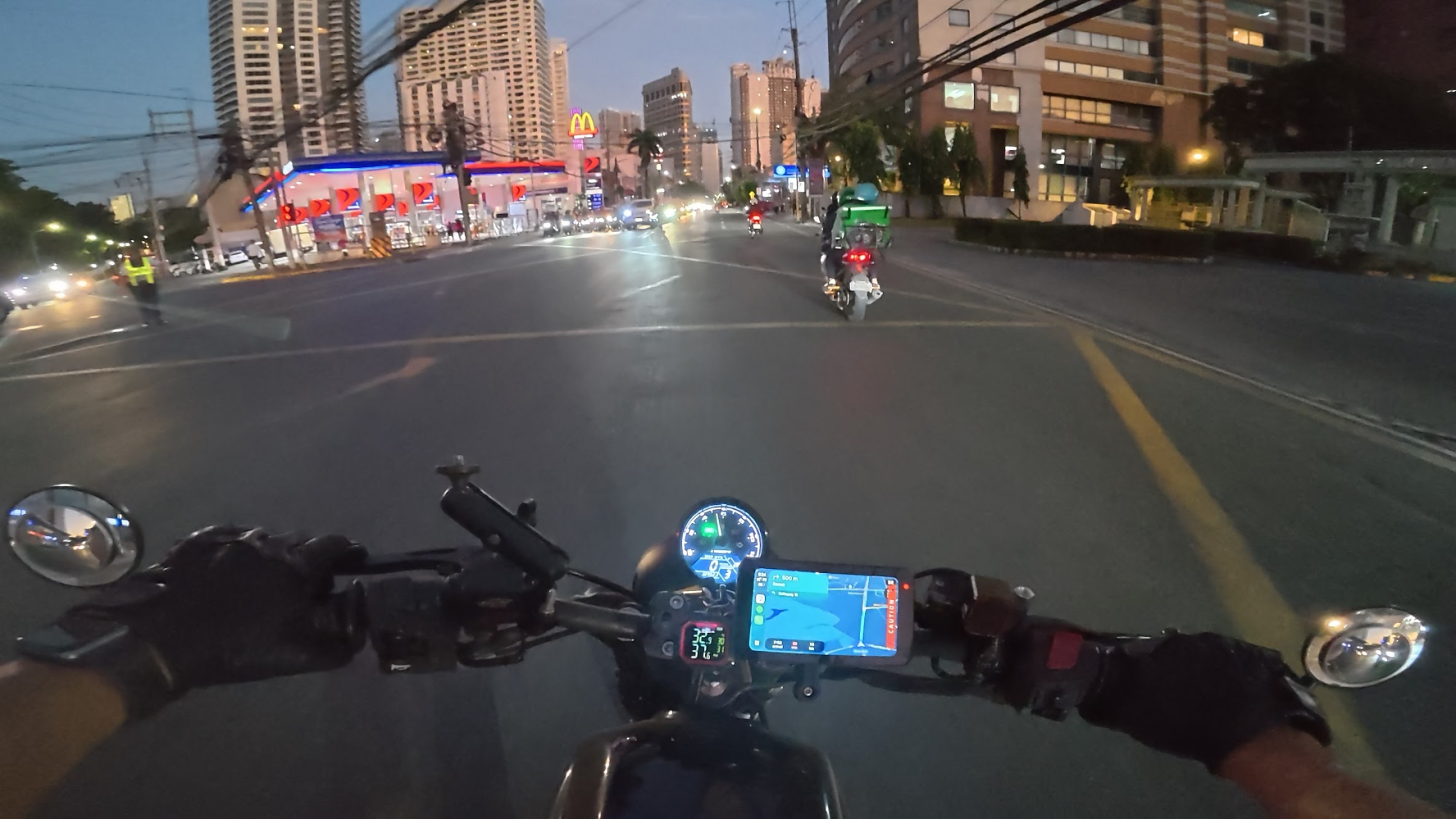
This is the EVO’s biggest advantage, and there’s no equivalent on the Carpuride setup I tested. Its dual 1080p cameras loop-record automatically, lock clips on impact through a G-sensor, and held up surprisingly well at night with legible plates at normal following distances. On EDSA and C5, the AI-based blind spot alerts caught cars I hadn’t clocked in my mirrors.
The action camera integration is another EVO-only perk worth mentioning. Paired with my DJI, it controlled recording and fed GPS and speed data into a log of the ride, which made footage far more useful for editing and retracing routes. One caveat: live preview on the screen isn’t available for DJI cameras yet, according to CHIGEE, so only Insta360 and GoPro users get the full experience.
The cost of all this is the microSD dependency, because the EVO has no internal storage. Without a U3 card, the cameras won’t record and firmware updates won’t run, so treat the card as part of the purchase. If you’ll never care about footage, you’re paying for hardware you won’t use.
TPMS and Riding Sensors: Both Have It, Packaged Differently
Both screens can show live tire pressure and temperature, so TPMS alone shouldn’t decide this. The real difference is packaging: Carpuride’s TPMS version adds two pre-paired sensors for just US$20 more, while CHIGEE sells its sensors separately for US$94. On the Carpuride I tested, readings matched my manual gauge every time I checked.
Each approach has a trade-off. Carpuride wants you to choose the TPMS version at checkout, and at US$20 extra there’s little reason to skip it. CHIGEE lets you add internal or external sensors whenever you want, but it adds real money to a unit that already costs more.
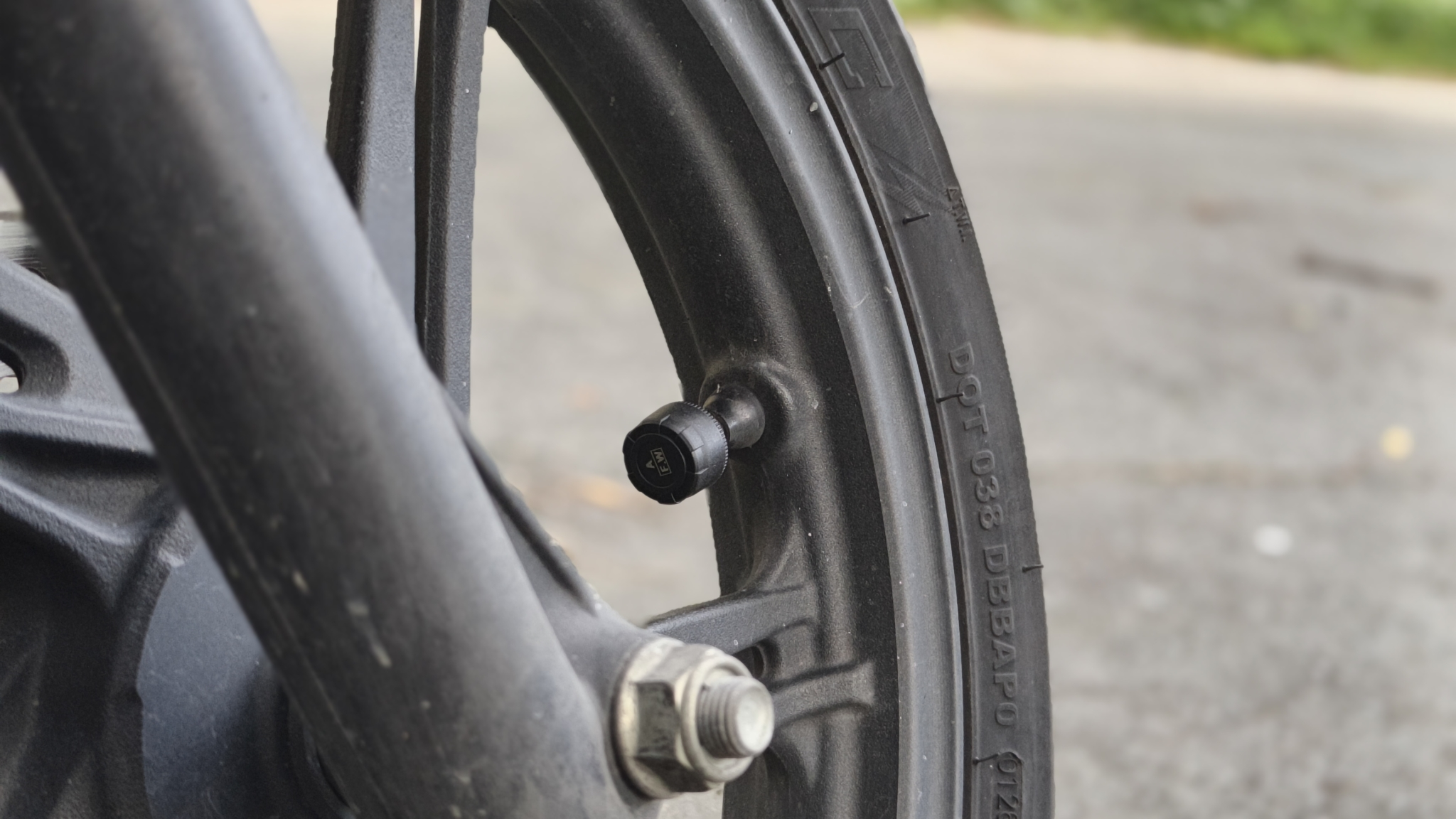
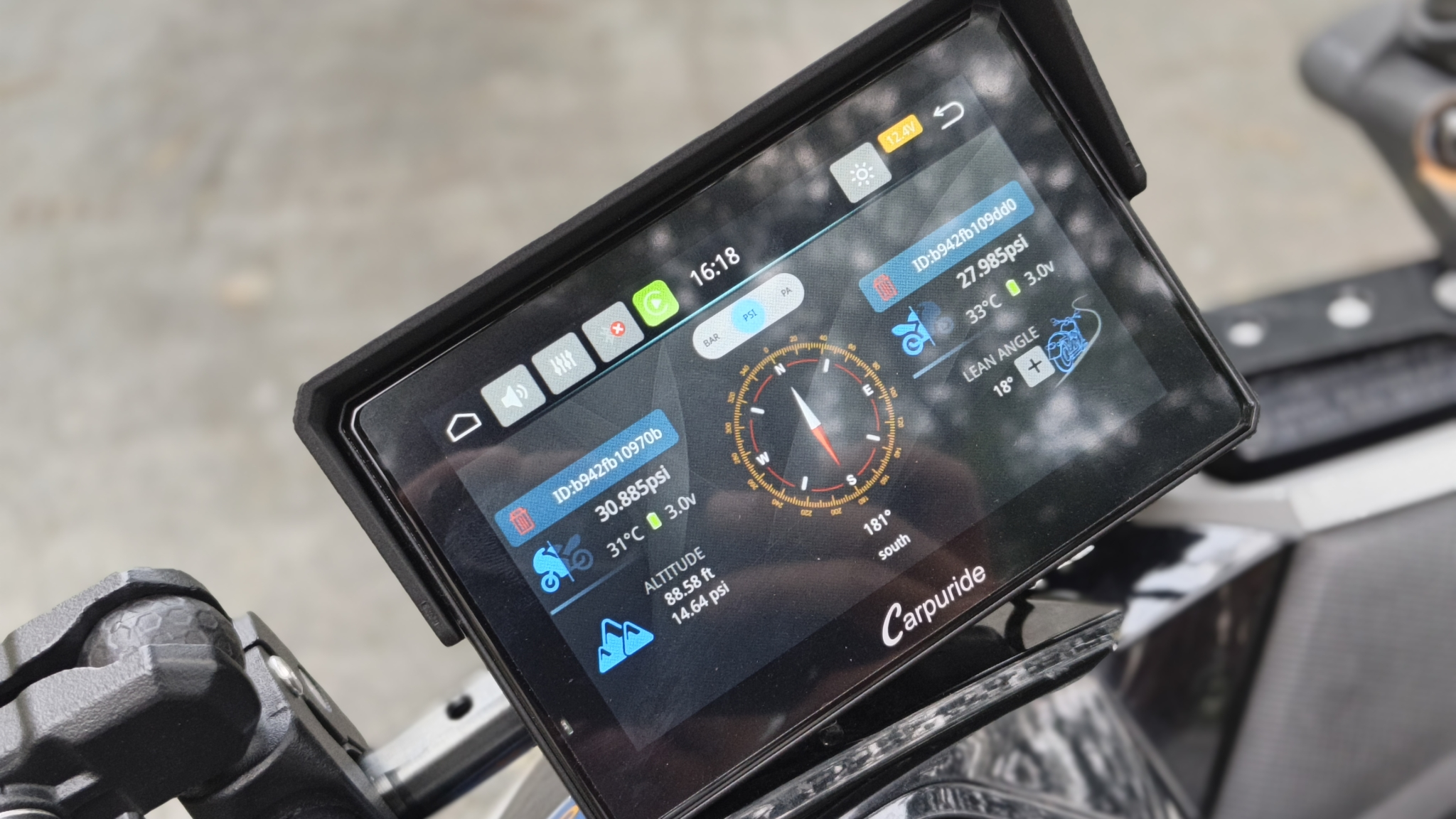
Beyond tires, the extra sensors differ. The Carpuride adds lean angle, a compass, and a barometer, though its lean angle readout lags during quick direction changes, so treat it as a fun bonus rather than serious telemetry. The EVO leans on its 10Hz GPS instead, which gives tighter speed and route logging and feeds that data into your action camera footage.
Weatherproofing and Build
On paper, the EVO is tougher, with an IP69K rating against high-pressure, high-temperature water jets on top of dust and submersion protection. The Carpuride is rated IP67, which is the common benchmark for motorcycle electronics and covers heavy rain and brief submersion. For Philippine rainy season riding, both ratings are adequate.
In fairness to both, neither unit went through a full monsoon in my testing. My EVO time was mostly in the dry season, and the Carpuride’s weeks on the scooter haven’t included a typhoon-level downpour yet. I’ll update this section once both have survived a proper rainy-season commute.
Where the Carpuride has a practical edge is mounting flexibility. My unit came with a square bracket and a 360° ball mount, which made it easy to dial in the viewing angle on a scooter’s tight cockpit. The EVO’s ball-head handlebar mount is solid and rattle-free, but it has no quick-release, so the screen stays on the bike when you park.
Which One Should You Buy?
Choose the CHIGEE AIO-5 EVO if:
- You have no dashcam yet and want recording plus navigation in one unit
- You ride busy multi-lane roads like EDSA, C5, or the expressways where BSD earns its keep
- You shoot ride content with a DJI, Insta360, or GoPro and want GPS data in your footage
- You don’t mind a hardwired install and buying a U3 microSD card
Choose the Carpuride W502S Pro + TPMS if:
- You want the lowest entry price for a reliable wireless CarPlay screen
- Tire pressure and temperature matter more to you than video recording
- You want a USB plug-and-ride install you can do in a parking lot
- You ride with a pillion and want two headsets plus intercom
- You already own a separate dashcam, or you simply don’t want one
FAQ
Is the CHIGEE AIO-5 EVO better than the Carpuride W502S Pro?
Neither is better across the board. The EVO is stronger for safety recording and BSD, while the Carpuride is stronger on price, install ease, and built-in TPMS.
Does the Carpuride W502S Pro have a dashcam?
The W502S Pro + TPMS unit I tested has no dashcam. If you need recording, pair it with a separate camera or look at the EVO.
Does the CHIGEE AIO-5 EVO support TPMS?
Yes, but the tire sensors are an optional purchase. The Carpuride TPMS version includes two sensors in the bundle.
Can I install either one myself?
The Carpuride is a simple USB install most riders can do in under 20 minutes. The EVO needs hardwiring, which is doable with basic skills but takes longer.
Which one handles rain better?
Both are rated for rain, with IP67 on the Carpuride and IP69K on the EVO. The EVO has the higher rating, but neither has been through a full monsoon in my testing yet.
Do I need a memory card?
The EVO requires a U3 microSD card for recording and firmware updates. The Carpuride doesn’t need one for CarPlay and TPMS.
Final Verdict
After riding with both, I don’t think one of these beats the other outright. The CHIGEE AIO-5 EVO is the more complete safety package, with dashcams, blind spot detection, and tougher weather sealing in one unit. The Carpuride W502S Pro + TPMS is the smarter buy for riders who mostly want CarPlay and tire data without the extra cost or install time.
The deciding question is simple: do you want your screen to record the road, or to watch your tires? If it’s the road, the EVO’s higher price buys hardware you’d otherwise pay for separately. If it’s the tires, the Carpuride delivers that for less and gets you riding the same day.
Carpuride W502S Pro + TPMS
A 5-inch waterproof CarPlay/Android Auto display with two mounting options—a square bracket and a 360° ball mount—plus wireless connectivity and an optional TPMS system for real-time tire pressure and temperature monitoring.
CHIGEE AIO-5 EVO
The AIO-5 Evo is a 5-inch motorcycle smart riding display with built-in dual 1080p front and rear cameras, wireless CarPlay and Android Auto, blind spot detection, 10Hz GPS, and IP69K waterproofing. It is the more accessible entry point into CHIGEE's AIO-5 family, sitting below the AIO-5 Lite in the lineup. The key difference: no internal storage. You will need your own microSD card.
Whichever you pick, plan around its catch before checkout. For the EVO, that means buying a U3 microSD card and blocking off time for the hardwire install. For the Carpuride, it means picking the TPMS version upfront, since it’s only US$20 more and saves you sorting out sensors later.